
If you spend any time on the internet, you know the "Cat Loaf."
It is that specific pose where a cat tucks all four paws and their tail underneath their body, transforming into a perfect, rectangular brick of fur. They look like a loaf of bread (or a meatloaf) fresh out of the oven.
While we meme it for being cute, biologists and vets look at it differently. This simple geometric shape is actually a complex survival tool. It tells you about your cat's body temperature, their safety level, and even their kidney health.
Here is the complete dictionary of the Cat Loaf.
Key Takeaways
- The Heat Trap: Cats loaf to preserve body heat (thermoregulation).
- The Trust Signal: Hiding their paws means they don't feel the need to run away.
- The Variations: From the "Sphynx" to the "Boat," each pose has a nuanced meaning.
- The Warning: A "Pain Loaf" (hunched back, head down) is a sign of illness.
1. The Science: Why Do They Do It?
Thermoregulation (Heat Conservation) Your cat runs hotter than you. A cat's normal body temperature is between 100°F and 102.5°F (38-39°C). Their paws and nose are the few places where they lose heat. By tucking their paws underneath their belly and wrapping their tail around their nose, they are sealing the heat in. It is basically a self-contained sleeping bag. Loafing is different from sleeping, but you can learn more about cat sleeping positions.
The Ultimate Trust Look at the paws. They are gone. In the wild, a predator needs its feet ready to sprint at a moment's notice. By entering a "Full Loaf," your cat is voluntarily disabling their ability to run or fight. If they do this next to you, it is a massive compliment. They are saying, "I feel so safe in this environment that I don't need my weapons ready."
Relaxed But Ready Unlike rolling on their back (total vulnerability) or curling into a ball (deep sleep), the Loaf allows a cat to rest while keeping their head up. They can survey the room, watch birds, or judge you, all while conserving energy.
2. The "Bakery" Menu: Types of Loaves
Not all loaves are baked equally. Here are the common variations you will see.
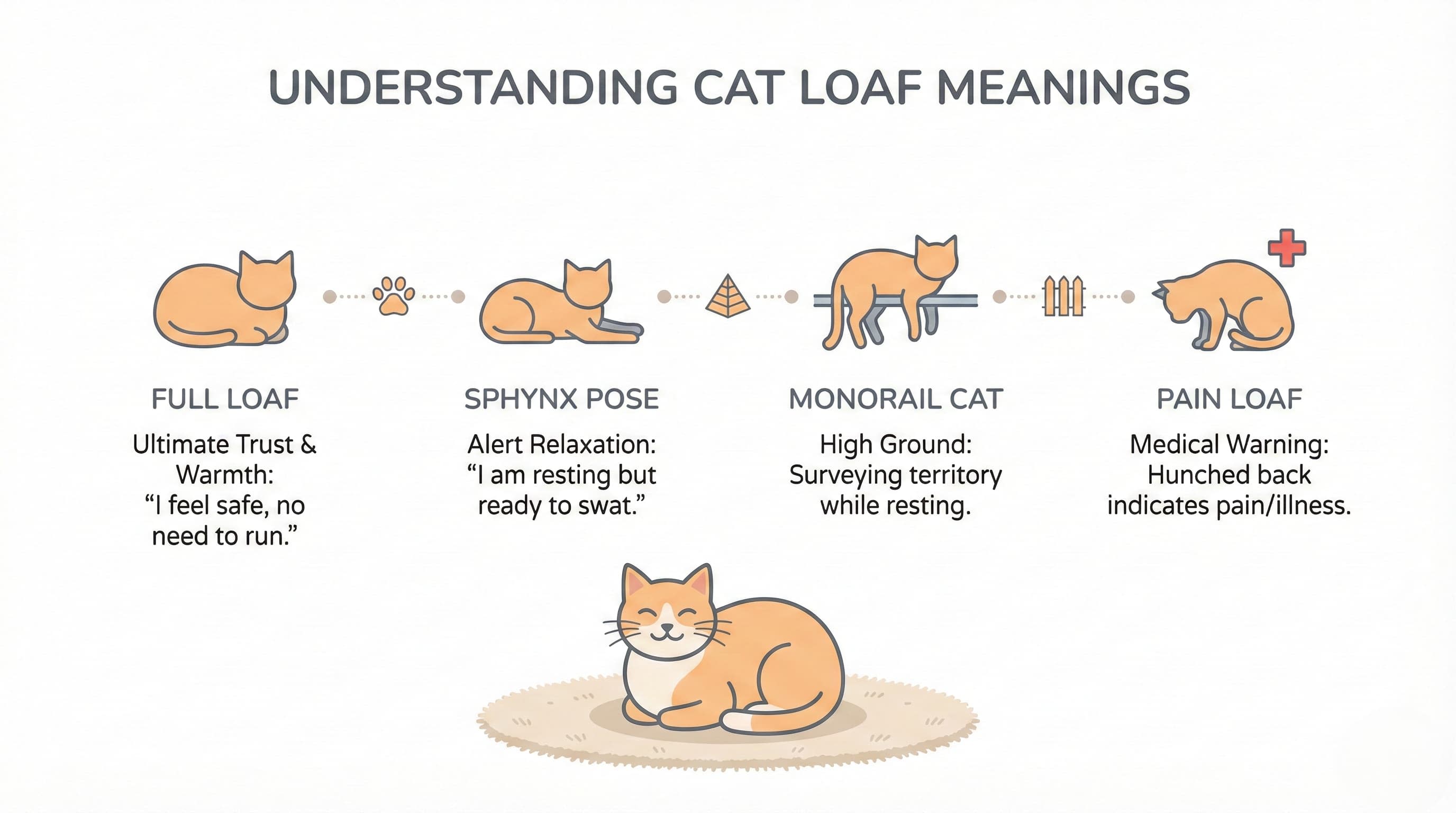
The Full Loaf (The Classic) All four limbs are completely tucked away. The tail is wrapped tight. The chest is on the floor.
- Meaning: "I am cold, I am comfy, and I am not moving for the next 3 hours."
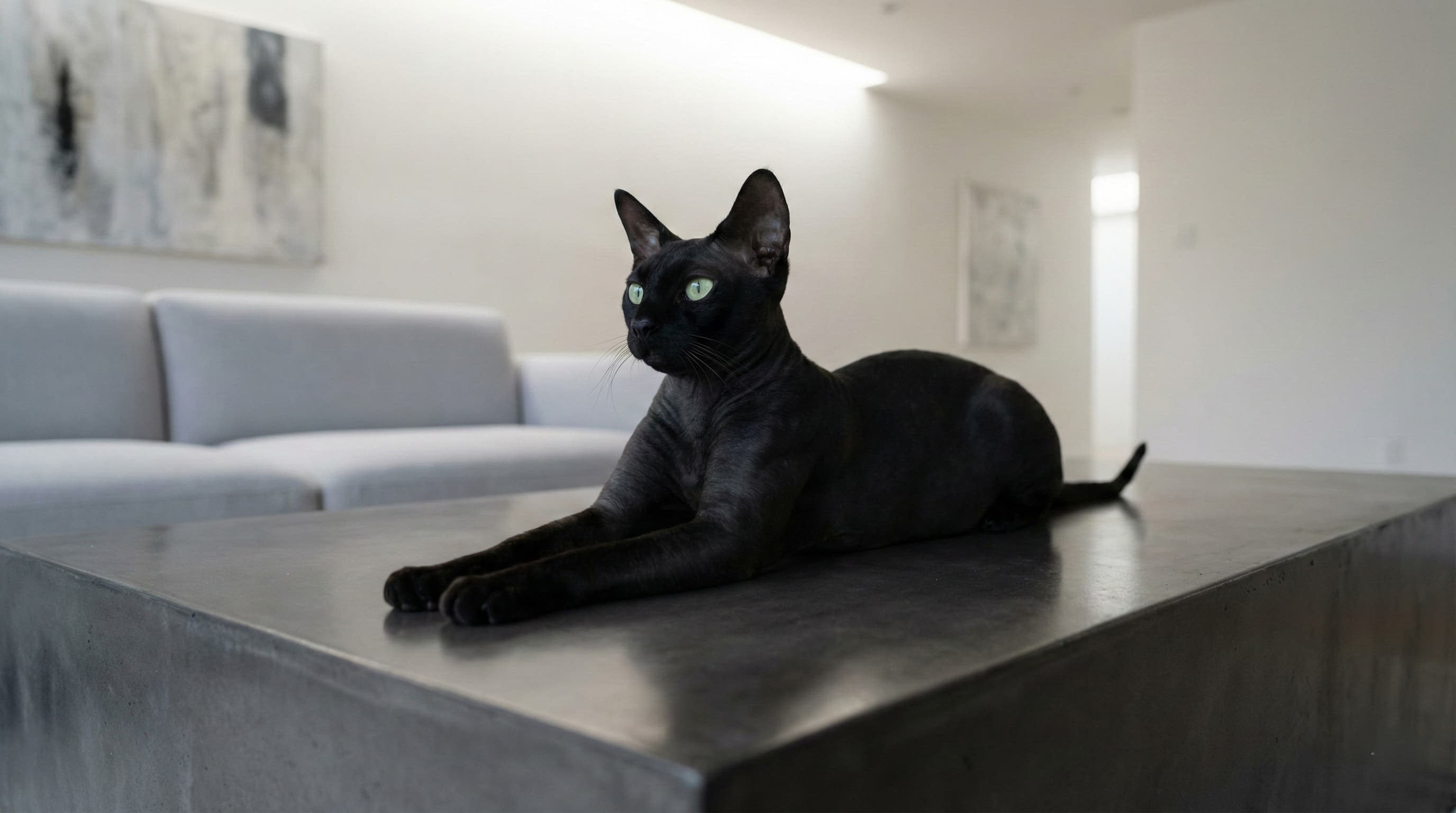
The Sphynx (The Partial Loaf) The back legs are tucked, but the two front paws are extended straight out, like the Great Sphinx of Giza.
- Meaning: "I am relaxing, but I might need to smack something in a minute." It shows a slightly higher level of alertness than the Full Loaf.
The Loaf Boat One front paw is tucked, but the other is sticking out sideways like an oar.
- Meaning: Usually just a quirk or a sign that the floor is uneven. It is the casual, sloppy version of the loaf.
The Monorail Cat This is an internet classic. The cat loafs on a narrow surface (like a railing, the back of a sofa, or a door), with legs dangling down on either side.
- Meaning: It shows off their incredible balance and desire to be high up (to survey their kingdom) while resting.
The Face Loaf (Face Plant) The cat loafs but buries their nose directly into the floor or their paws.
- Meaning: Usually, it just means "my nose is cold" or "turn off the lights." However, if they press their head against a wall, that is a medical emergency (Head Pressing).
3. Red Flag: The "Pain" Loaf (Meatloaf Position)
This is the one you need to watch out for.
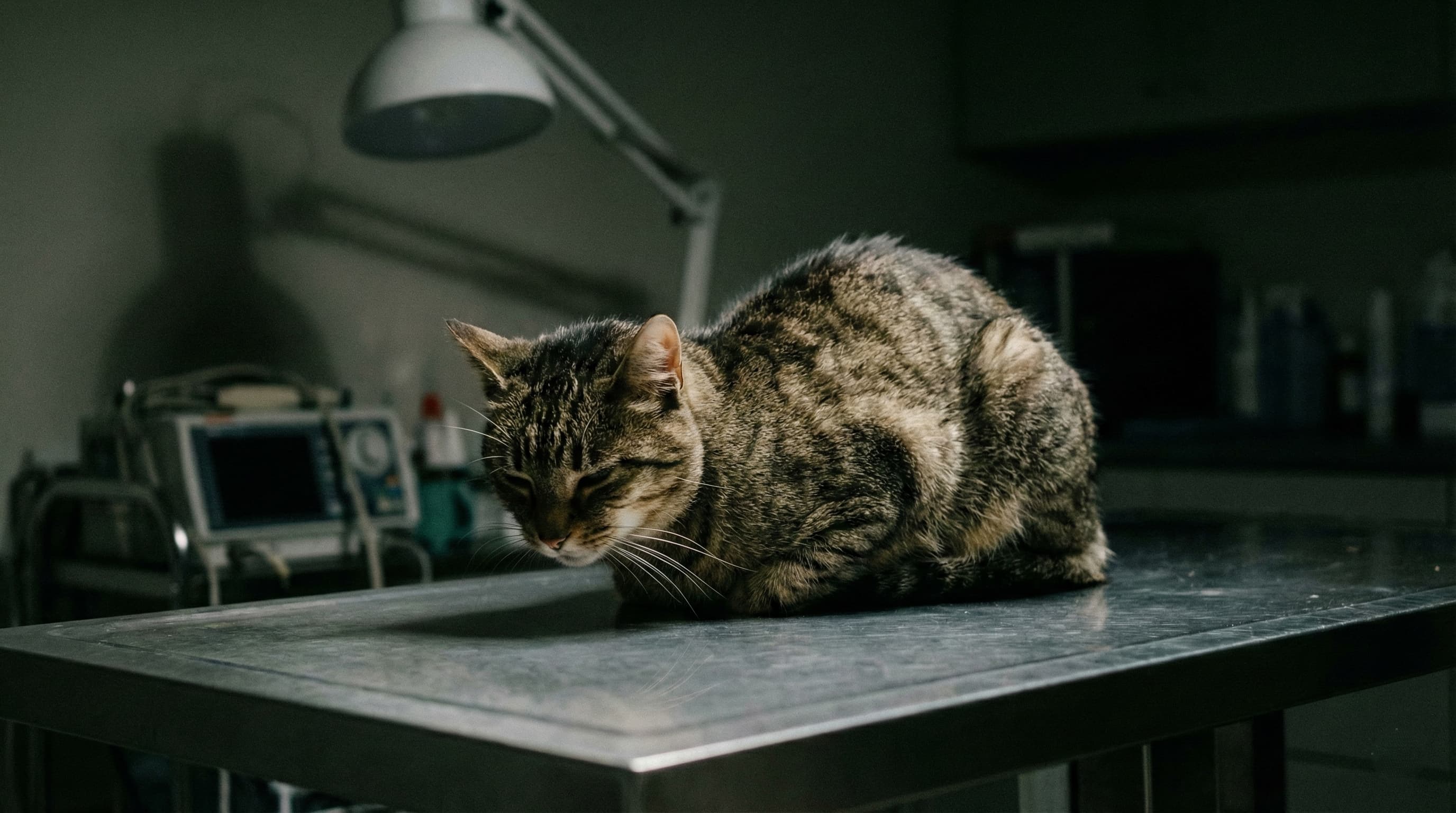
Sometimes, a cat loafs not because they are cozy, but because they are hurting. In veterinary medicine, the "Meatloaf" position can be a subtle sign of abdominal pain or chronic illness like Kidney Disease (CKD).
How to spot the difference:
- The Happy Loaf: Head up, ears forward, eyes soft or slow-blinking, purring.
- The Pain Loaf: Head hung low (chin near the floor but not sleeping), eyes squinting or glazed, whiskers pulled back, back slightly arched or tense. They often refuse to look at you or interact. A hunched loaf can indicate pain, one of the subtle signs of suffering.
If you see the "Pain Loaf" frequently, especially in an older cat, it is time for a blood test.
Why do cats sit like a loaf of bread?
Primarily for heat conservation. By tucking their limbs and tail under, they reduce surface area and keep their core warm. It also signals that they are relaxed and do not feel the need to be ready to run.
Cat loafing with head down meaning?
This is a warning sign. If the head is hung low, eyes are squinted, and they are facing a wall or corner, it is likely the "Pain Loaf." It indicates discomfort, nausea, or headache.
Why do cats tuck their paws?
Tucking the front paws (the "Salesman" pose) protects their delicate paw pads and claws. It is the ultimate sign of comfort, as they are intentionally "disarming" themselves in your presence.
Final Thoughts
The Cat Loaf is one of the most efficient postures in the animal kingdom. It is a heat-saving, space-saving, and adorable way for your cat to recharge.
So the next time you see your furry friend turn into a brick of bread, take it as a compliment. They are comfortable enough to tuck away their running shoes.
Frequently Asked Questions
Not all cats loaf! Some prefer sprawling out (splooting) or curling up. It might also depend on the temperature—if your house is very warm, they have no need to conserve heat by loafing.
Yes! Lions, tigers, and leopards have all been photographed in the loaf position. It is a universal feline behavior for resting while staying alert.


