As an Amazon Associate I earn from qualifying purchases.
The litter box. It is the one thing every cat owner wishes they didn't have to deal with.
You buy a brand that smells like lavender, but your cat hates it. You buy a clumping clay that locks in odor, but it creates a dust cloud that makes you cough. You buy eco-friendly pellets, and your cat refuses to step on them.
The truth is, there is no "perfect" litter. There is only the right material for your specific problem. Are you fighting ammonia smell? Are you trying to stop tracking? Or is your cat coughing?
Here is the science-based guide to picking the right weapon for the job.
Key Takeaways
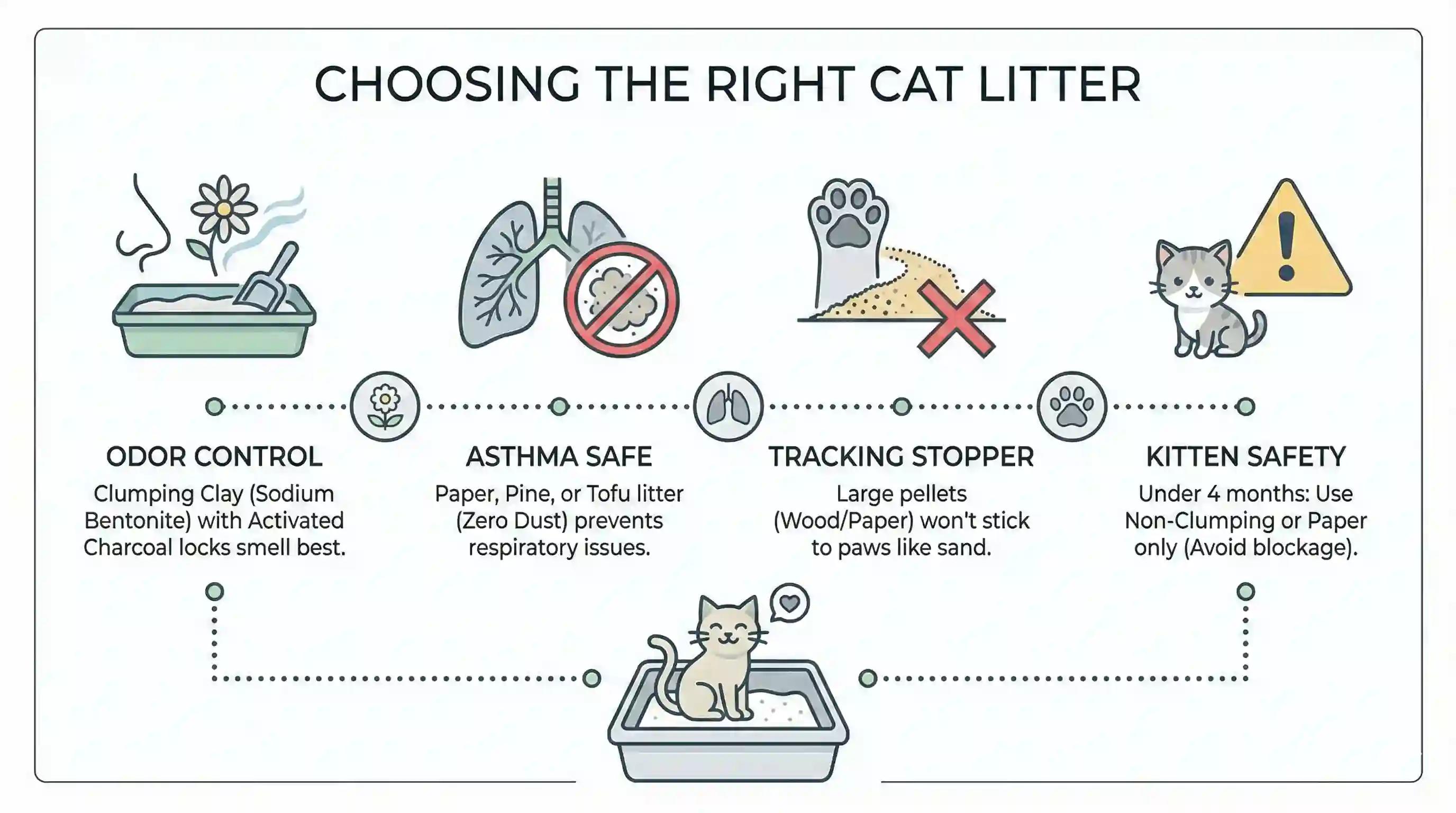
- For Odor: Clumping Clay (Sodium Bentonite) is still the king of encapsulation.
- For Asthma: Switch to Paper, Pine, or Tofu litter immediately (Zero dust).
- For Tracking: Larger pellets (Pine/Paper) don't stick to paws like sand does.
- For Kittens: Never use clumping litter under 4 months old (fatal blockage risk).
Quick Picks (Recommended by Scenario)
If you are in a rush, here are the top performers based on our testing for specific household problems.

Best Overall (Odor Control)
Dr. Elsey's Ultra: The gold standard for multi-cat homes. It forms concrete-hard clumps that lock in ammonia instantly. Heavy, but worth it.
Best Dust-Free (Asthma Safe)
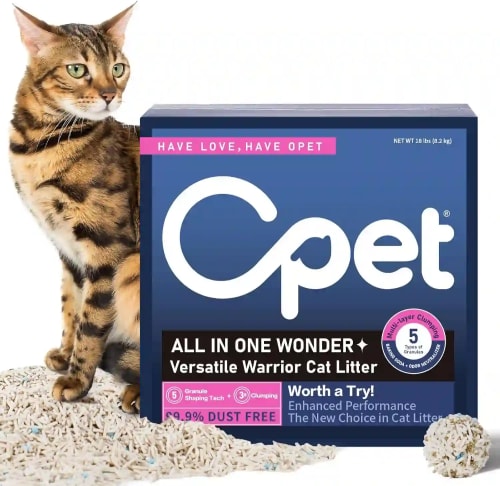
OPET: Zero dust. Zero respiratory irritation. Recommended by vets for post-surgery and asthmatic cats.
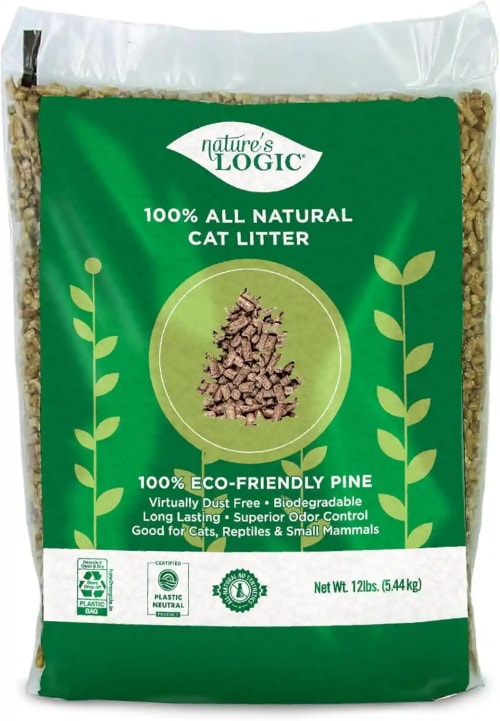
Best Low-Tracking
Feline Pine Pellets: Heavy wooden pellets that physically cannot stick to paws. Turns into sawdust when wet.
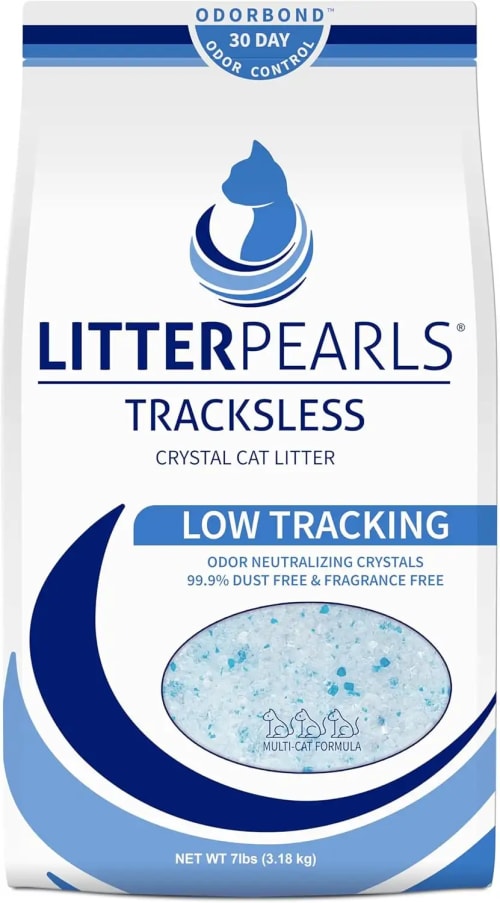
Best for Kittens (<4 Months)
Litter Pearls: Tracksless Unscented Non-Clumping Crystal Cat Litter that is safe if accidentally ingested and encourages litter box usage.
Choose in 10 Seconds
Not sure what you need? Follow this decision tree:
- House smells like ammonia? → Go to Section 1 (Clay).
- Cat is coughing/sneezing? → Go to Section 2 (Biodegradable).
- Litter all over the bed? → Go to Section 3 (Pellets).
- You have a new Kitten? → Go to Section 4 (Kitten Safety).
- Want to flush it? → Buy Tofu or Corn.
- Want cheap? → Buy Generic Non-Clumping Clay.
The Stink War: Best for Odor Control
If your primary issue is the smell of ammonia that hits you when you walk in the door, you need Clumping Clay.
Why it works: High-quality clay litter is made of Sodium Bentonite. When wet, this clay swells instantly, encapsulating the urine and feces in a hard shell. This physically traps the odor bacteria inside.
- Pro Tip: Look for formulas with Activated Charcoal. Charcoal acts like a magnet for odor molecules, pulling them out of the air.
The Downside: It is heavy, not eco-friendly, and dusty.
What To Buy: Clumping Clay
- Look for: "99.9% Dust Free" and "Activated Carbon".
- Good for: Multi-cat households, automated litter boxes.
- Avoid if: You have asthma or hate carrying 40lb bags.
Top Pick: Dr. Elsey's Ultra
Features activated carbon mixed into the clay granules for maximum odor neutralization.
The "Sneeze" Factor: Best for Asthmatic Cats
Does your cat wheeze or cough after using the box? Do you see a cloud of grey smoke when you pour fresh litter?
That dust contains silica, which is a lung irritant. For cats with Feline Asthma (or owners with allergies), traditional clay is dangerous.
The Fix: Biodegradable Litter You need to switch to organic materials.
- Corn & Wheat: Clumps well but can carry aflatoxins (mold) if stored damp.
- Tofu/Soy: Extremely popular in Asia. It is dust-free, flushable, and clumps decently.
- Recycled Paper: The absolute best for respiratory issues (zero dust), but it doesn't clump well.
What To Buy: Dust-Free
- Look for: "Paper Pellets" or "Tofu".
- Good for: Post-surgery recovery (won't stick to wounds) and Asthma.
- Avoid if: You want to use with automatic litter box.
Top Pick: OPET Mixed Tofu Cat Litter
Made from 100% Natural & Eco-Friendly Composition. It is the #1 vet-recommended litter for safe healing.
The Tracking Mess: Keeping Floors Clean
If you find "sand" in your bed or all over the kitchen floor, the problem is Grain Size.
Fine clay litter is like sand at the beach; it sticks to everything. It gets stuck between your cat's toes and travels with them.
The Fix: Pellets
- Wood (Pine) Pellets: These are heavy and large. They physically cannot stick to fur or paws. When they get wet, they turn into sawdust, which settles at the bottom.
- Crystal (Silica Gel) Chunks: These are larger than clay and track less, but they can be sharp on sensitive paws.
The Trade-off: Cats generally prefer soft, sandy textures (like their ancestors in the desert). They might protest if you switch to hard pellets too quickly.
What To Buy: No-Track Pellets
- Look for: "Kiln-Dried Pine".
- Good for: Long-haired cats (Maine Coons/Persians).
- Avoid if: Your cat has very sensitive paws.
Top Pick: Feline Pine Original
100% natural pine. Smells like a forest, absorbs liquid instantly, and never leaves the box.
The Kitten Safety Rule
This is a life-or-death warning. Never use clumping clay litter for kittens under 4 months old.
Kittens explore the world with their mouths. They will eat the litter.
- The Risk: Clumping clay swells 15x its size when wet. If a kitten swallows it, it will expand in their stomach and cause a cement-like blockage that requires surgery to fix.
- The Solution: Use Non-Clumping Clay or Paper Pellets until they stop "taste-testing" everything.
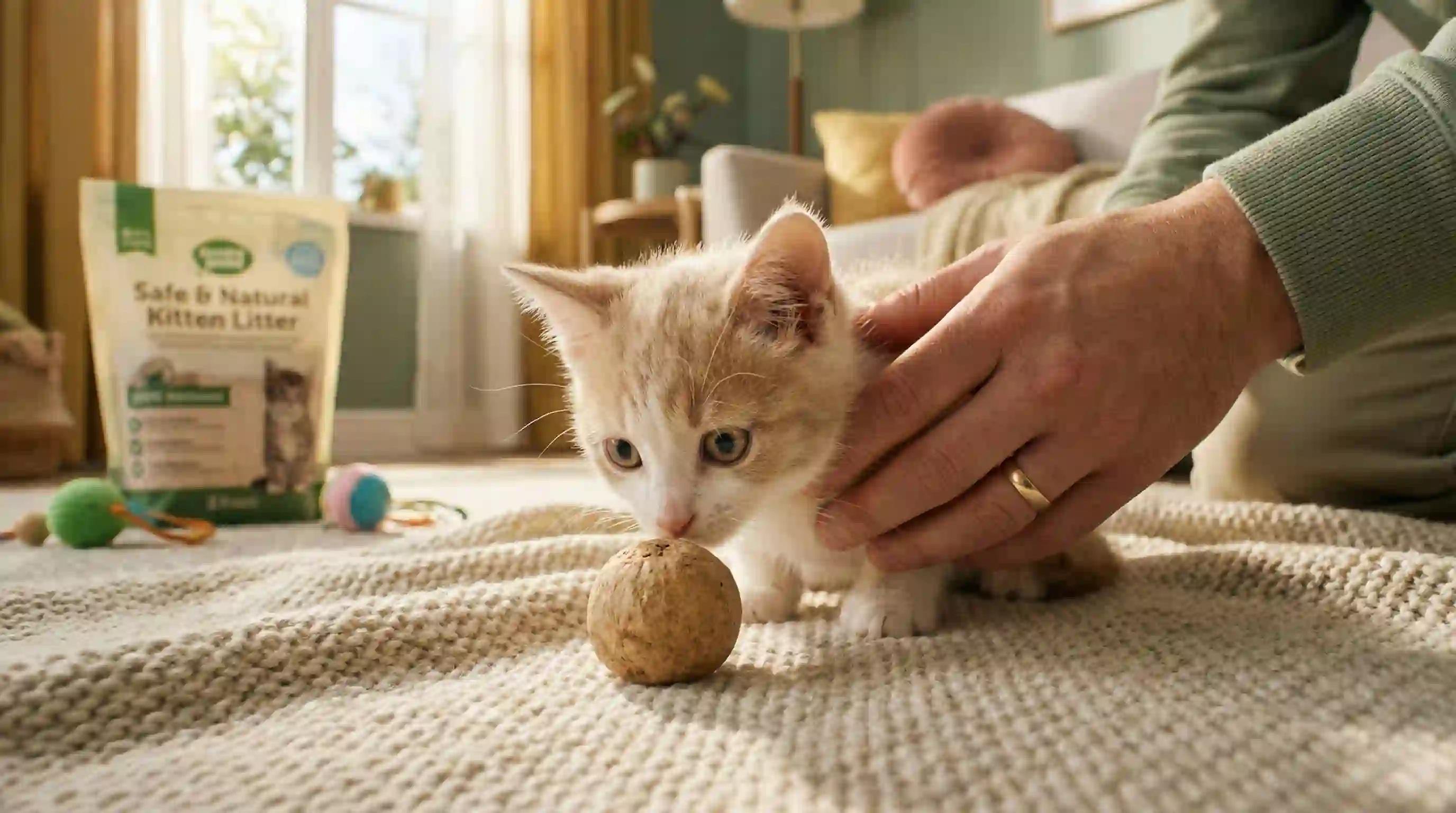
What To Buy: Kitten Safe
- Look for: "Non-Clumping" or "Kitten Attract".
- Good for: Litter training and safety.
- Avoid if: You want easy scooping (you have to dump the whole tray).
Top Pick: Litter Pearls
A fragrance-free litter, with less mess, that controls odors and is soft on cats' paws.
Material Showdown: What Should You Buy?
The Good
- + Clay: Superior odor control and clumping
- + Tofu/Corn: Eco-friendly, flushable, low dust
- + Crystal: Absorbs moisture instantly, lightweight
- + Paper: Safest for kittens and surgery recovery
The Bad
- - Clay: Heavy, dusty, bad for environment
- - Tofu/Corn: Can be expensive, susceptible to bugs
- - Crystal: Doesn't clump (you stir the pee), sharp texture
- - Paper: Zero clumping (hard to clean pee)
How We Evaluate Litter
We don't just blindly pick bags off the shelf. Here is our criteria:
- Clump Strength: We drop a standardized 2lb weight on the clump. If it shatters, it fails.
- Odor Control: We test retention after 24 hours in a sealed room.
- Toepad Feel: We prioritize textures that mimic natural soil, as cats are more likely to use them.
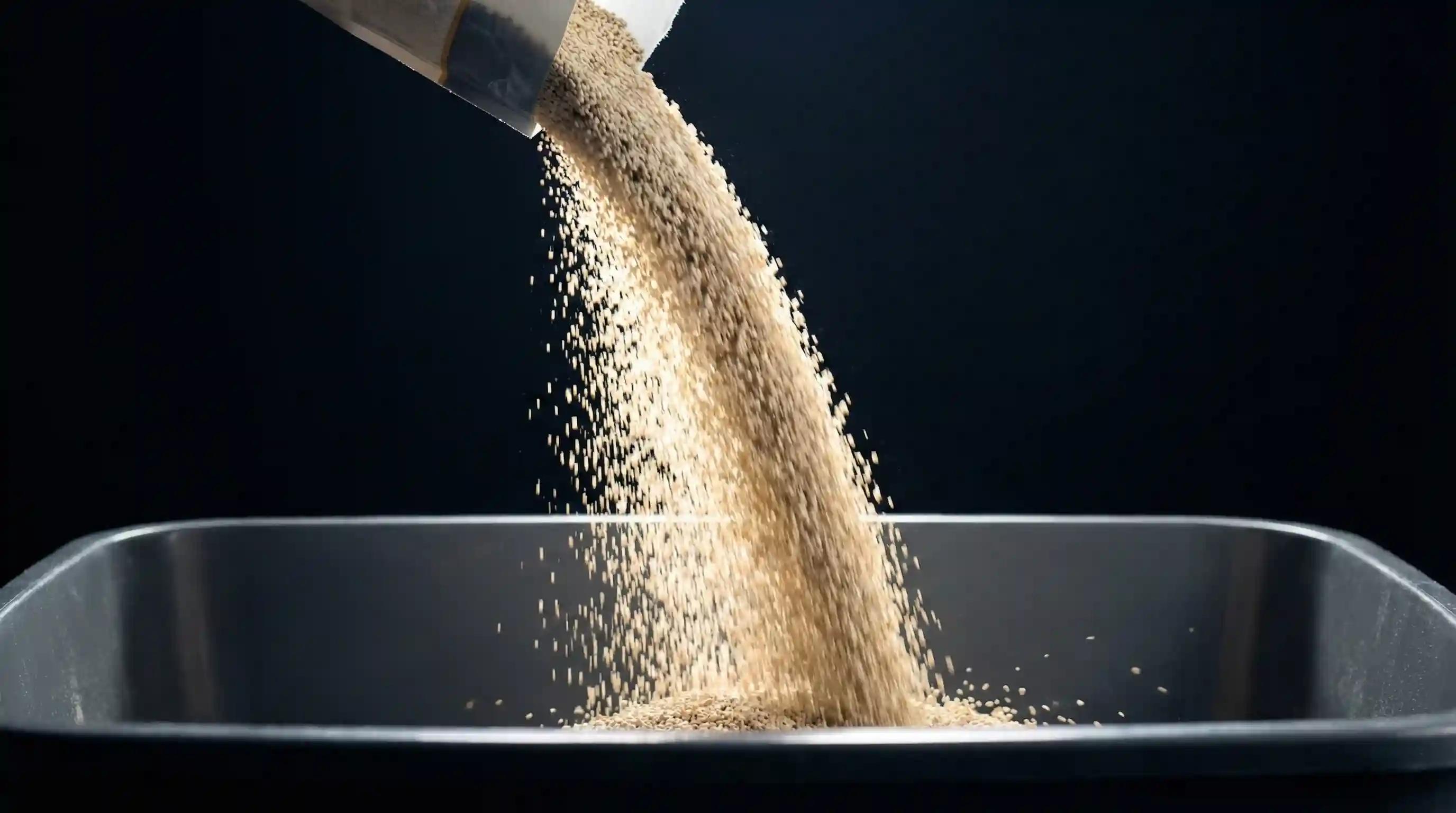
- Dust Cloud: We pour from a height of 12 inches against a black background to measure particulate matter.
The 7-Day Transition Plan
Cats hate change. If you swap litter overnight, they might swap your bed for their toilet.
- Days 1-2: Mix 25% new litter with 75% old litter.
- Days 3-4: 50% new, 50% old.
- Days 5-6: 75% new, 25% old.
- Day 7: 100% new litter.
Final Thoughts
How often should you replace the entire litter box?
You should scrub the box monthly. However, you should replace the actual plastic box once a year. Cats' claws create micro-scratches in the plastic that harbor bacteria and odors which scrubbing can't reach.
Can you flush biodegradable litter?
Technically yes (for tofu/corn), but plumbers advise against it. Old pipes can clog easily with clumping matter. It is always safer and cheaper to bag it and trash it.
Why does my cat stand on the edge of the litter box?
This often means the litter puts them off. It might be too dirty, the texture might hurt their paws (crystals), or the box is too small, and they are trying to avoid touching the "mess".
There is no magic sand. If you want zero smell, you deal with dust (Clay). If you want zero dust, you deal with weaker clumps (Tofu/Paper).
The best litter is the one your cat will actually use. If you switch to fancy wood pellets and your cat starts peeing on your bed, switch back. A dirty litter box is better than a ruined mattress.
Frequently Asked Questions
It depends on your pipes. While tofu and corn litter are technically biodegradable, they still form clumps. In older houses with narrow pipes, these clumps can cause clogs. It is always safer to throw it in the trash.
A cat's sense of smell is 14x stronger than yours. That 'Fresh Linen' scent smells like a chemical explosion to them. Scented litter is the #1 reason cats stop using their box. Always buy Unscented.
If you scoop daily, you should dump the whole box and scrub it with soap once a month. Over time, bacteria build up in the plastic scratches of the box, creating a permanent smell that fresh litter can't cover.