Cats are the stars of the internet for a reason. They are weird.
One moment they are elegant hunters, and the next they are stuck in a box or staring at a wall. We laugh at their antics, but every single one of these strange behaviors is rooted in serious survival biology.
Whether you are a new owner or a lifelong cat servant, here is the scientific explanation for the 10 things your cat does that make zero sense.
Key Takeaways
- The "Loaf": It is the perfect pose for heat conservation and quick escapes.
- The "Blep": Sticking the tongue out often means they are "tasting" a smell.
- The Purr: It acts as a self-healing mechanism for their bones and muscles.
- The Cucumber: They don't hate vegetables; they hate "snakes."
1. Making Biscuits (Kneading)
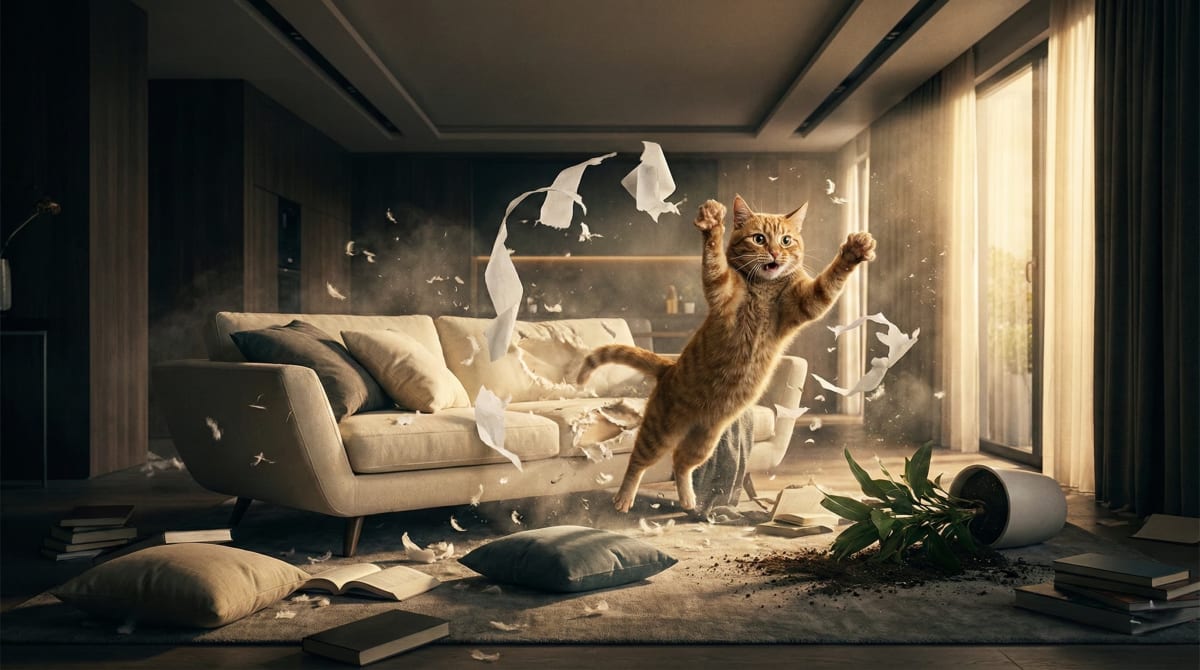
Why does your cat push their paws in and out on your stomach?
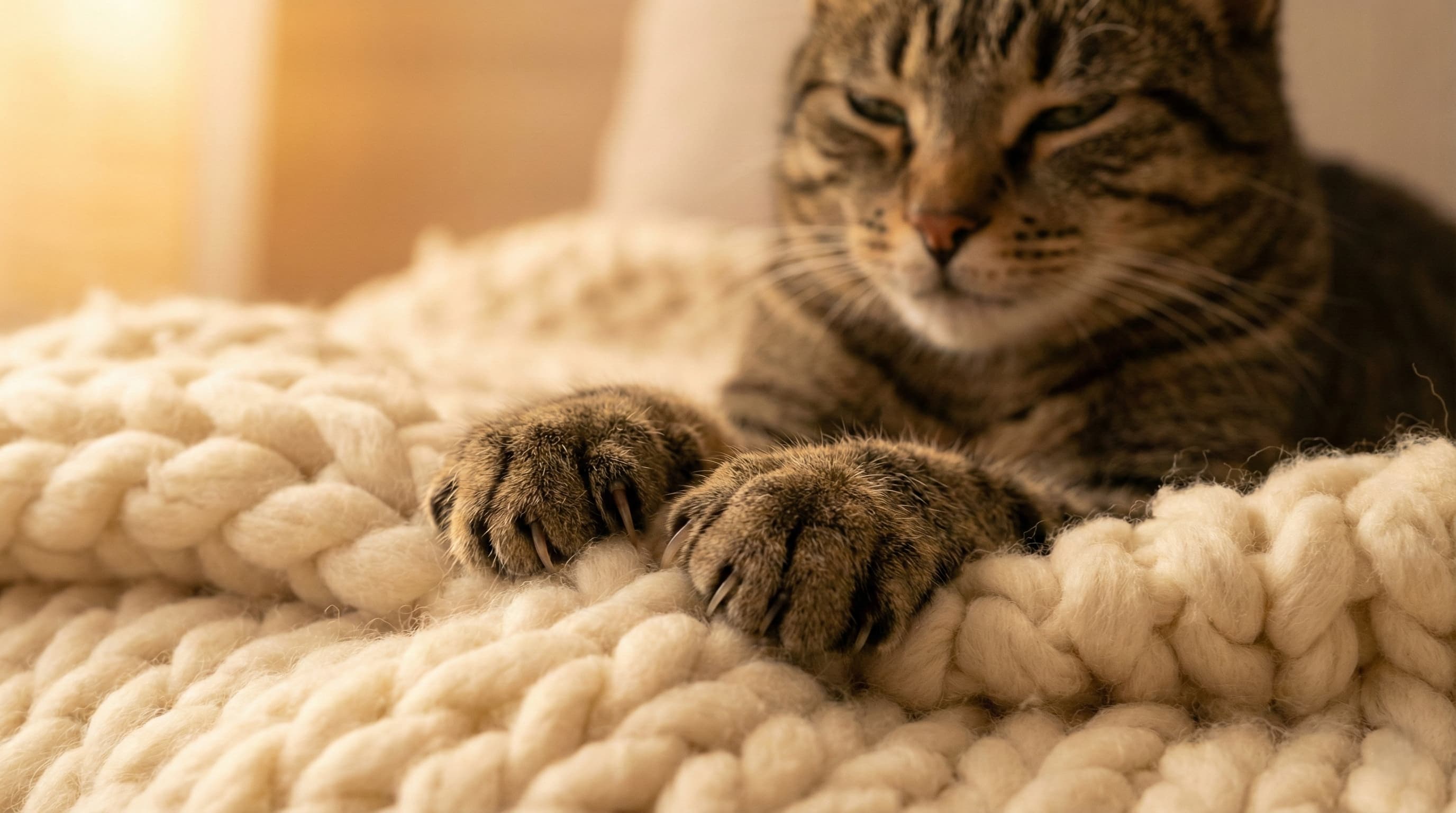
It is a childhood memory. Kittens knead their mother's belly to stimulate milk flow. When an adult cat does it to you, it means they feel the same safety and comfort they felt as a kitten. They are also marking you with scent glands in their paws, effectively saying, "This human is mine."
2. The "Cat Loaf"
This is when a cat tucks all four paws under their body, turning into a perfect rectangle of fur.
It serves two purposes. First, it conserves body heat. Second, it protects their soft belly while keeping them ready for action. Unlike lying on their side, a "loafing" cat can spring to their feet instantly if a threat appears. It is the ultimate "relaxed but ready" pose.
3. The "Blep" (Tongue Out)
Sometimes a cat leaves the tip of their tongue hanging out. It looks silly, but it is often functional.
Cats have a special sensor on the roof of their mouth called the Jacobson's Organ. They use it to "taste" scents in the air (a reaction called the Flehmen response). Sometimes, they get so distracted analyzing a smell that they simply forget to put their tongue back in.
4. Purring (The Healing Engine)
We think purring equals happiness. But cats also purr when they are injured or giving birth.
Studies show that cats purr at a frequency between 25 and 150 Hertz. This specific frequency has been proven to improve bone density and promote tissue healing. So when your cat purrs on you, they aren't just saying "I love you." They might be healing themselves (or trying to heal you).
5. The Fear of Cucumbers
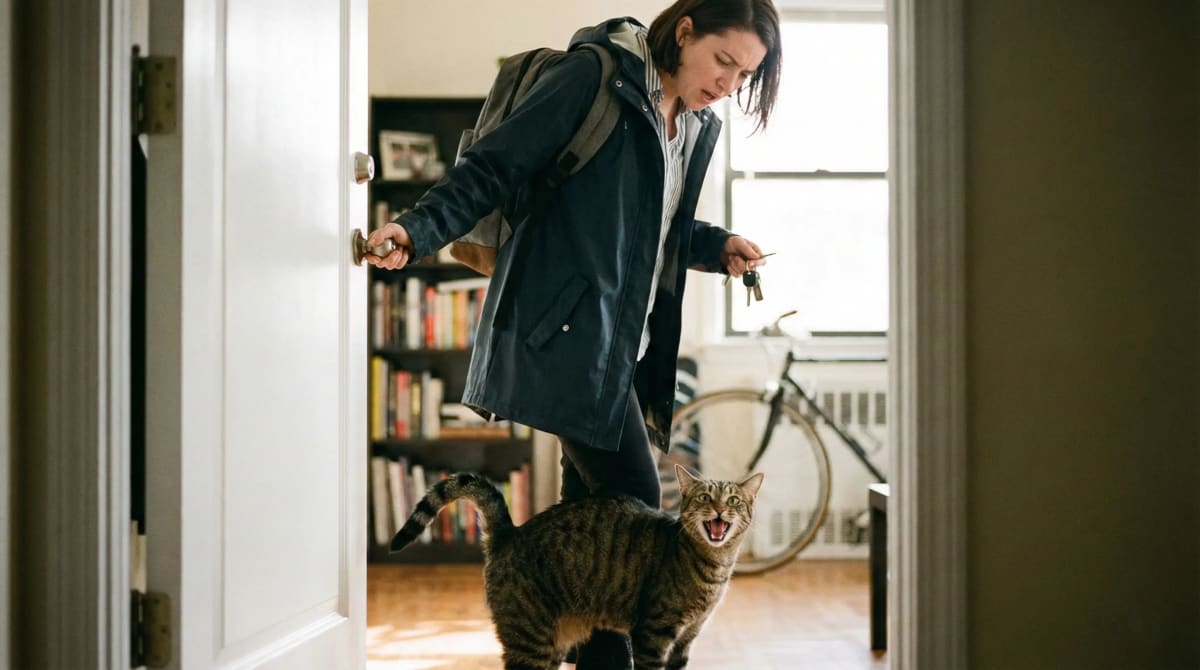
You have seen the videos. A cat turns around, sees a cucumber, and jumps five feet in the air.
It is not the vegetable. It is the Snake Instinct. Hardwired into every cat's brain is a deep fear of snakes. When they see a long, green object appear silently behind them, their primitive brain screams "VIPER!" and triggers an involuntary panic jump before they even realize what it is.
Note: Please don't do this to your cat. It causes genuine trauma.

6. Hating Water
If they are such great hunters, why can't they handle a bath?
It is about physics. A cat's fur is not waterproof like a dog's. When it gets soaked, it becomes extremely heavy and takes hours to dry. This makes the cat slow, cold, and vulnerable to predators. Their hatred of water is a logical survival choice.
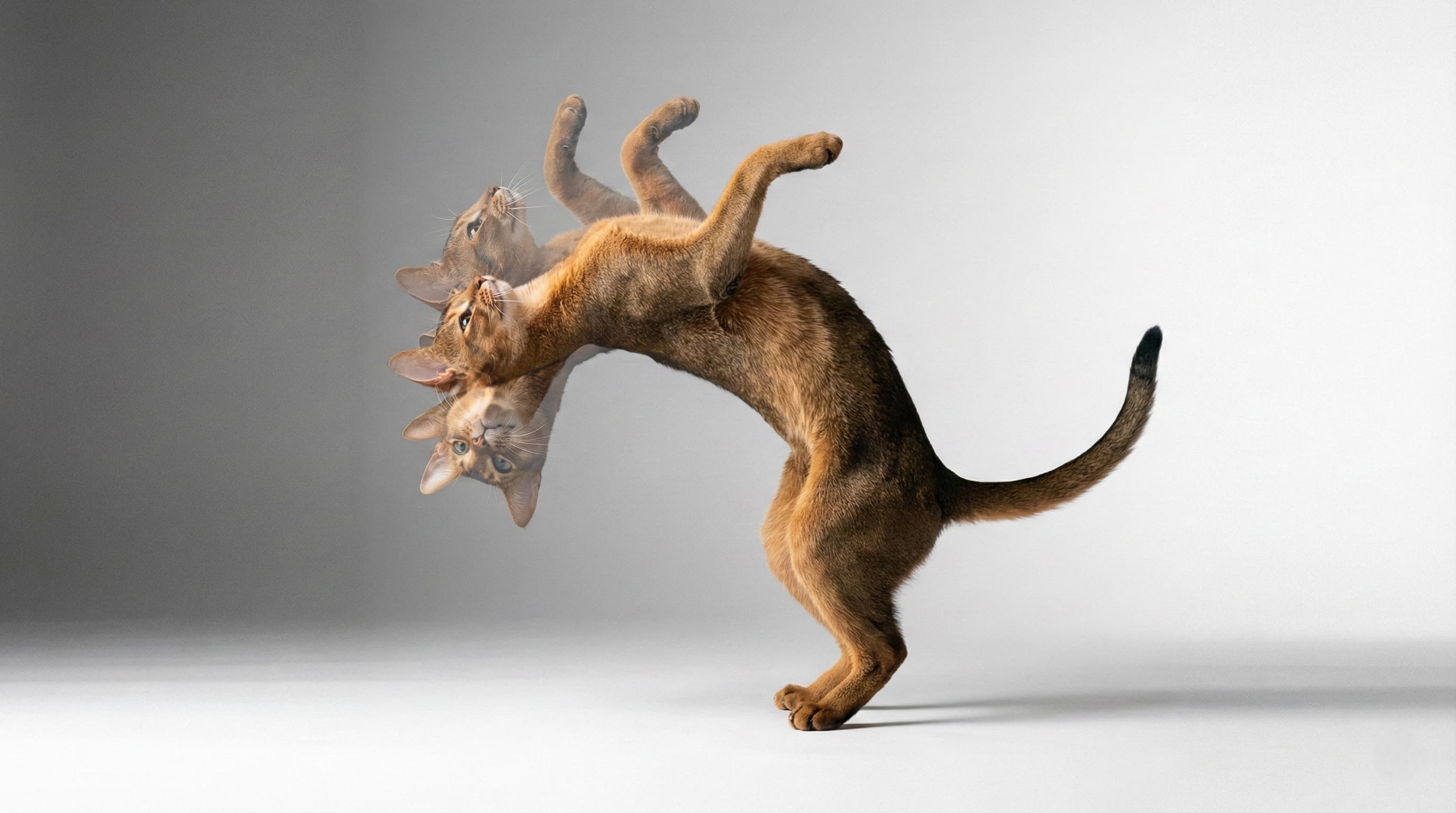
7. Always Landing on Their Feet
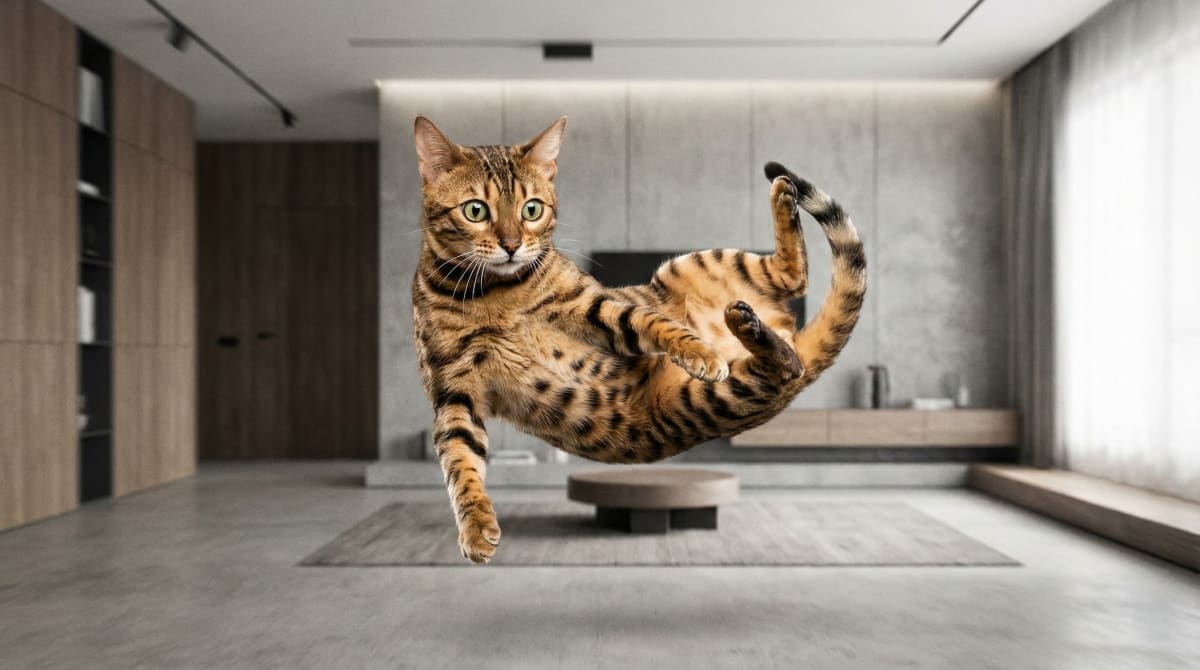
This is the Righting Reflex.
Cats have an unusually flexible spine and no collarbone. This allows them to twist their upper body and lower body independently. When falling, their inner ear (vestibular system) tells them which way is up. They rotate their head first, then their spine follows, allowing them to align their paws for impact in a split second.
8. Scratching Furniture
They aren't trying to ruin your sofa. They are doing yoga and writing a diary.
Scratching stretches their back muscles and removes dead nail sheaths. But more importantly, it leaves a visual mark (shreds) and a scent mark (from paw pads). It is a message to other cats: "I live here. This is my territory."
9. Random Attacks (The "Zoomies")
One minute you are petting them; the next, they bite your hand.
This is Overstimulation. A cat's hair follicles are very sensitive. Repetitive petting can go from "feels good" to "painful static electricity" very quickly. The bite is just their way of saying, "Okay, that is enough now."
10. Drooling
While drooling can be a sign of dental disease (bad), some cats are just "Happy Droolers." When they are completely relaxed and purring, their jaw muscles go slack, and they forget to swallow. It is gross, but it is a sign of pure bliss.
Why does my cat stare at the blank wall?
Cats have superior vision and hearing. They are likely staring at dust motes in a sunbeam or hearing a bug inside the drywall. They aren't seeing ghosts; they are seeing things too small for you to notice.
Why do cats chatter at birds?
This jaw-spasming behavior is caused by frustration and adrenaline. They see prey they can't reach, and their body mimics the "killing bite." Some scientists also believe they are trying to mimic bird calls.
What does it mean when a cat kneads dough?
It means they are comfortable. Kneading (making biscuits) is a kitten instinct used to stimulate milk flow from their mother. If they do it on you, they view you as a safe, maternal figure.
Frequently Asked Questions
The belly is the most vulnerable part of a cat. It houses all their vital organs. Unlike dogs, most cats see a hand coming for their belly as a potential attack, triggering a defensive kick-and-bite reflex.
In the animal kingdom, staring is a threat. However, cats also stare to gather information. If they stare at you with soft eyes, they are just observing their favorite human. If the stare is hard and unblinking, they might be asking for space.