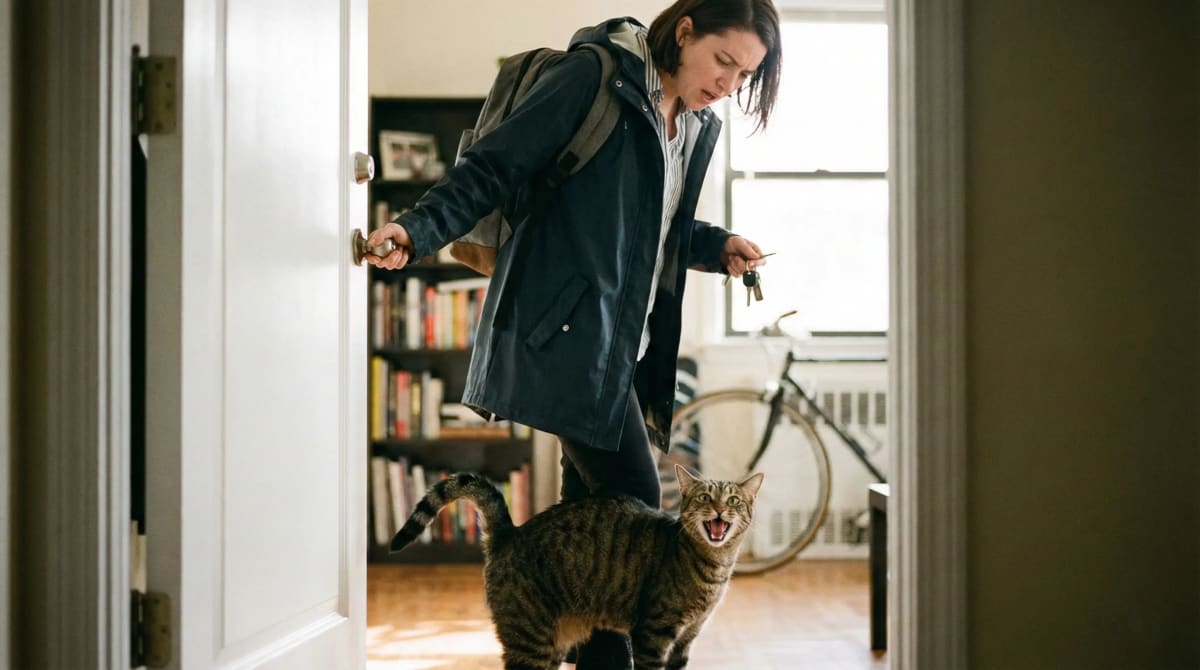
You grab your keys, and suddenly your cat is at your feet, meowing like they're being rehomed. You leave for work, and by the time you check your apartment camera, you've already received 3 notifications of "loud meowing detected."
If this sounds familiar, your apartment cat has Separation Anxiety.
And here's the truth: cats aren't meant to be alone for 8-10 hours a day. In the wild, they have territories, hunting routines, and social connections. In your 600-square-foot apartment, they have... a window and a food bowl.
What Separation Anxiety Actually Looks Like
Many cat owners don't recognize separation anxiety because they expect it to look like a dog - destructive, pacing, dramatic. But cats express distress in subtler ways.
The Good
- + Cats with mild separation anxiety can often be helped with environmental changes alone.
- + Apartment cats often do better than house cats because routines are more predictable.
- + Once addressed, separation anxiety rarely returns.
- + There are many free or low-cost interventions that work.
The Bad
- - Severe cases may require vet consultation and medication.
- - It takes 2-4 weeks to see real improvement - consistency is key.
- - Apartments mean neighbors can hear crying, adding pressure.
- - Some cats are naturally more prone to anxiety (e.g., rescues, Siamese).
The Signs You're Missing
- The Welcome Home Rampage: Your cat goes absolutely bonkers when you return - not from joy, but from relief.
- Pooping Outside the Box: Only when you're gone. This is a classic anxiety signal.
- Excessive Grooming: Cat licks until they have a bald spot.
- Refusing to Eat: Some cats will literally wait for you to eat, even if they're hungry.
- Constant Surveillance: They watch you leave like you're never coming back.

The Psychology: Why Apartment Cats Struggle More
In a house, a cat has multiple rooms, outdoor access (maybe), and more sensory stimulation. In an apartment, especially a studio, your cat's entire world is one room.
The "Colony of One" Problem
Cats are solitary by nature, but they still need stimulation density - enough happening in their environment to fill the hours. When you're gone, nothing happens. No birds, no rustling leaves, no changes in the environment.
The hours stretch out like days for your cat. They have no hunting, no exploring, no social interaction. Their brain goes into "stress mode" because in nature, this level of environmental silence usually means danger.
The Vertical Advantage (Use It!)
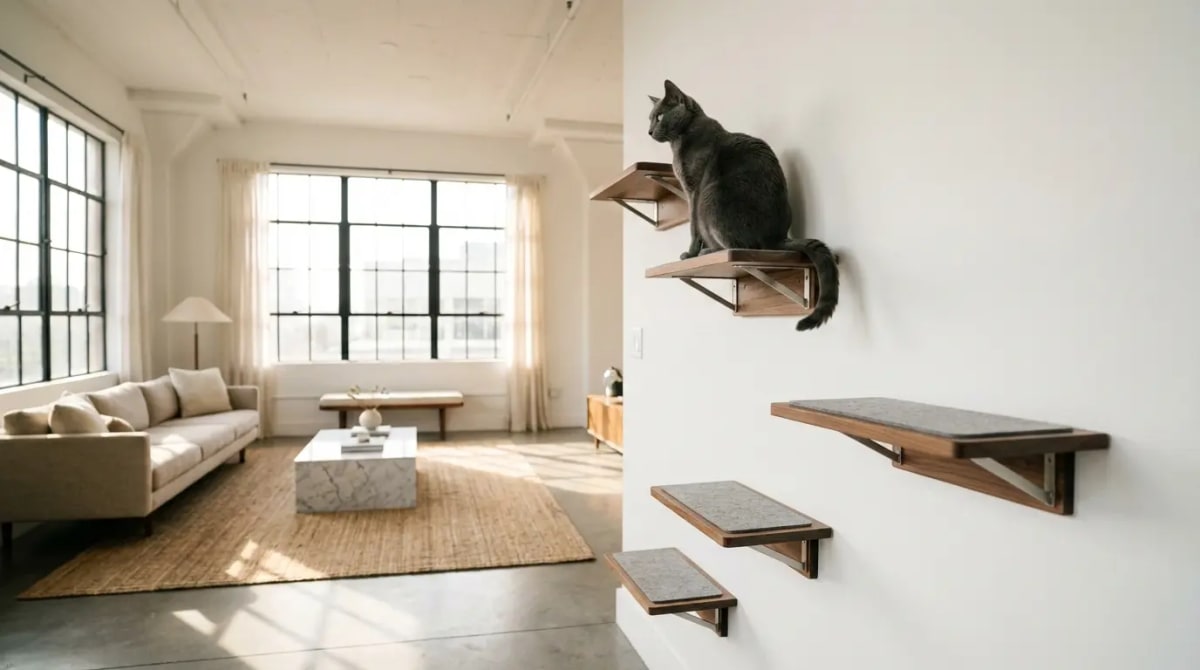
Here's what's great about apartments: you can build vertical territory. Your cat's usable space isn't 500 square feet - it's 500 square feet of floor space + however much wall space you can catify.
Before you spend money on toys, invest in shelves and perches. Your cat can survey their kingdom, change positions, and feel like they have control over their environment.
The 4 Pillars of Fixing Separation Anxiety
Pillar 1: The "No Big Deal" Exit Routine
How you leave matters as much as what you do while you're gone.
What you're doing wrong:
- Making a huge production of leaving ("Oh baby, mama has to go to work, I'll be back sooon!")
- Lingering at the door
- Coming back multiple times for "just one more hug"
The fix:
- Leave during a neutral moment - not during play or cuddles
- Give zero attention for 5 minutes before leaving - let your cat settle
- Exit quickly and calmly - no eye contact, no talking
- Ignore them for 10 minutes when you return - let them settle before you greet
This teaches your cat: "You leaving is boring and normal. Me leaving is not a crisis."
Pillar 2: The "Foraging" Breakfast
Food is the #1 tool for separating cats. You control the food, so use it.
The mistake: Free-feeding dry kibble in a bowl means breakfast takes 47 seconds. Then your cat has 9 hours of nothing.
The solution:
- Replace the bowl with puzzle feeders - make breakfast take 15-20 minutes
- Use a portion of their daily food for morning foraging - they "hunt" their breakfast
- Hide small portions around the apartment - one in a paper bag, one under a towel, one in a puzzle toy
By the time they're done hunting, a chunk of your workday has passed for them. They've burned mental energy and feel accomplished.
Pillar 3: The "Cat TV" Setup
When you're gone, your apartment should still feel alive.
The hierarchy of entertainment:
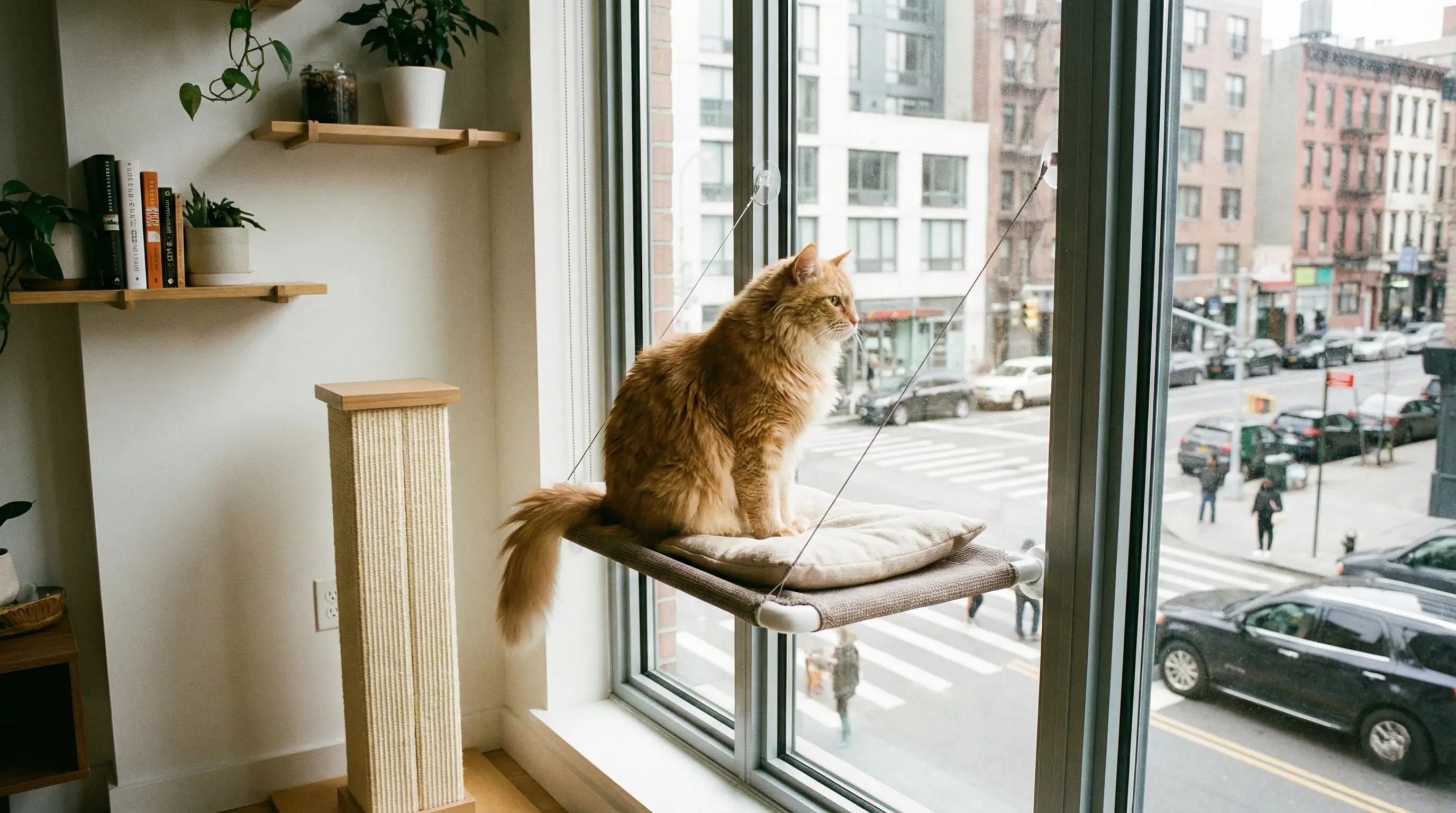
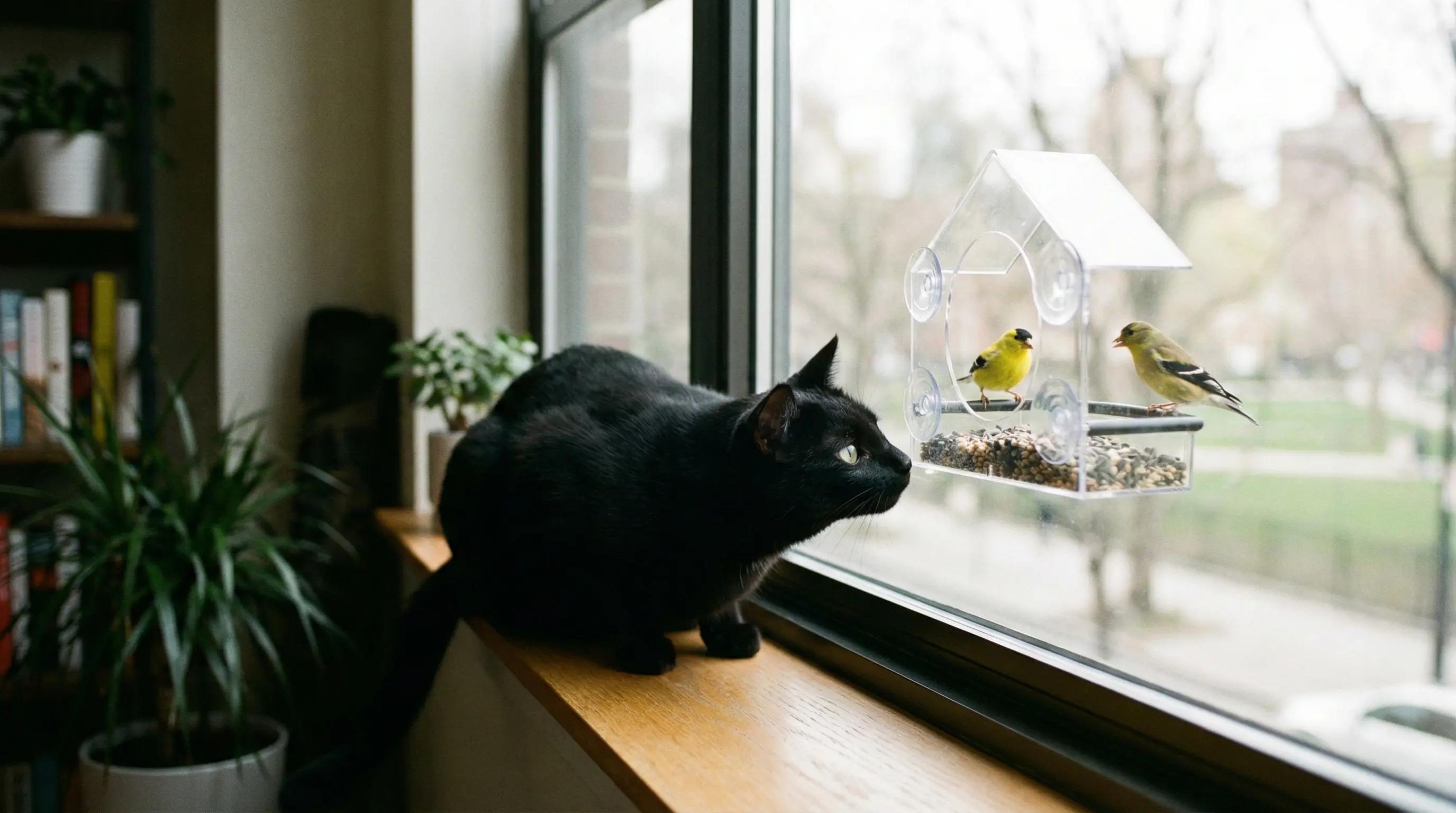
- Window bird feeder (if you have a window that opens safely) - #1 most effective
- Cat videos on YouTube played on a tablet (many cats are obsessed with "Cat TV")
- Moving toys: Battery-operated wands, motion-activated balls
- Rotating toys: Keep 3-4 toys out, rotate weekly
Pillar 4: The "Safe Space" Setup
Some cats feel better having a "panic room" - a small, enclosed space where they feel secure.
Options for apartments:
- The bathroom: Leave them access to the bathroom with food, water, and a bed. The enclosed space feels safer than an open studio.
- A covered cat bed: Some cats feel secure in caves and tents.
- A high perch: Being up high gives cats security and control.
The "Home Alone" Checklist
Before you leave each morning, run through this:
- Puzzle feeder filled with breakfast
- Extra water bowl placed
- Curtains/partially open for light
- White noise or calm music playing (cats prefer consistent low sound)
- Safe space accessible (bathroom, covered bed, or high perch)
- No hazards (cords, toxic plants)
- Camera on (optional, for peace of mind)
The Timeline: When Will You See Results?
Week 1: Expect no change. You are changing routine, and cats are creatures of habit. They may even seem more anxious as they figure out the new normal.
Week 2: You might notice shorter "welcome home" sessions or less frantic meowing.
Week 3-4: Real changes should be visible. Your cat should seem calmer about departures and returns.
Week 6+: The new routine is now their normal. Keep up the practices.
When It's More Than Anxiety
Some cats have genuine clinical anxiety that environmental changes won't fix. Signs you need a vet:
- Self-mutilation (pulling out fur until skin shows)
- Refusing to eat for 24+ hours
- Repeated vomiting from stress
- Physical symptoms with no medical cause
A vet can prescribe anti-anxiety medication for short-term use while you work on behavioral training. There's no shame in it - some cats need pharmaceutical help to break the anxiety cycle.
Final Thoughts: The Guilt Trap
Here's the thing: your cat is going to be okay.
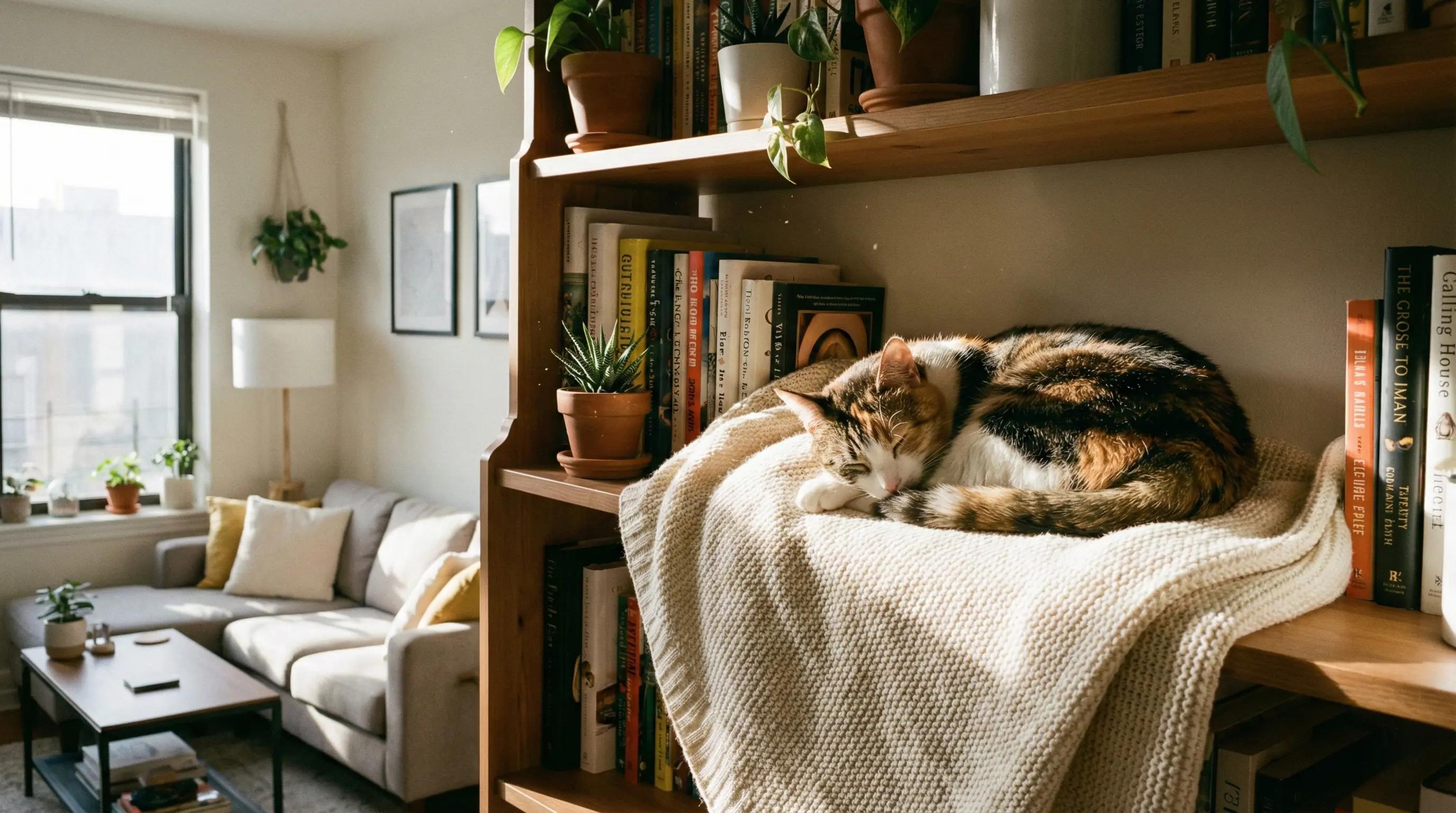
Cats sleep 16 hours a day anyway. A significant portion of your workday will overlap with their nap time. The 4-6 hours they're awake alone is not torture - it's their reality, and millions of cats live happy lives with working owners.
The goal isn't to eliminate all anxiety (impossible). It's to reduce it to a manageable level so your cat can relax and enjoy their alone time.
You are not a bad owner for having a job. You are a good owner for caring enough to read this article.
Frequently Asked Questions
Sometimes this helps, but it's risky. A second cat doubles the resource requirements (litter boxes, food space) and adds social pressure. If your cat is anxious, another cat might increase their stress. Try the environmental fixes first.
Not really. Cats don't understand TV. What helps is white noise, consistent ambient sound, or cat-specific videos. Regular TV with human voices and commercials can actually be overstimulating.
The crying is a call for attention. If you respond (even through the door), you reinforce the behavior. Ignore it completely for 2 weeks. Use a camera so you don't have to listen - you can watch to confirm they're okay without reinforcing the crying.
You need less than you think. One puzzle feeder, one window perch, and a covered bed can fit in any studio. The key is mental stimulation, not space. A cat with a puzzle feeder in a tiny room is more entertained than a bored cat in a mansion.