
If you live in a studio or one-bedroom apartment, every plant has to earn its spot.
It cannot just be pretty. It has to fit the light, fit the shelf, fit the room, and ideally not poison your cat if they decide to take one experimental bite at 2 AM.
That is where a lot of apartment plant advice falls apart.
Most "best apartment plants" lists are written like pets do not exist. They recommend whatever is trendy, low maintenance, and photogenic. The problem is that many of those same plants are not cat-safe at all.
So this guide goes the other direction.
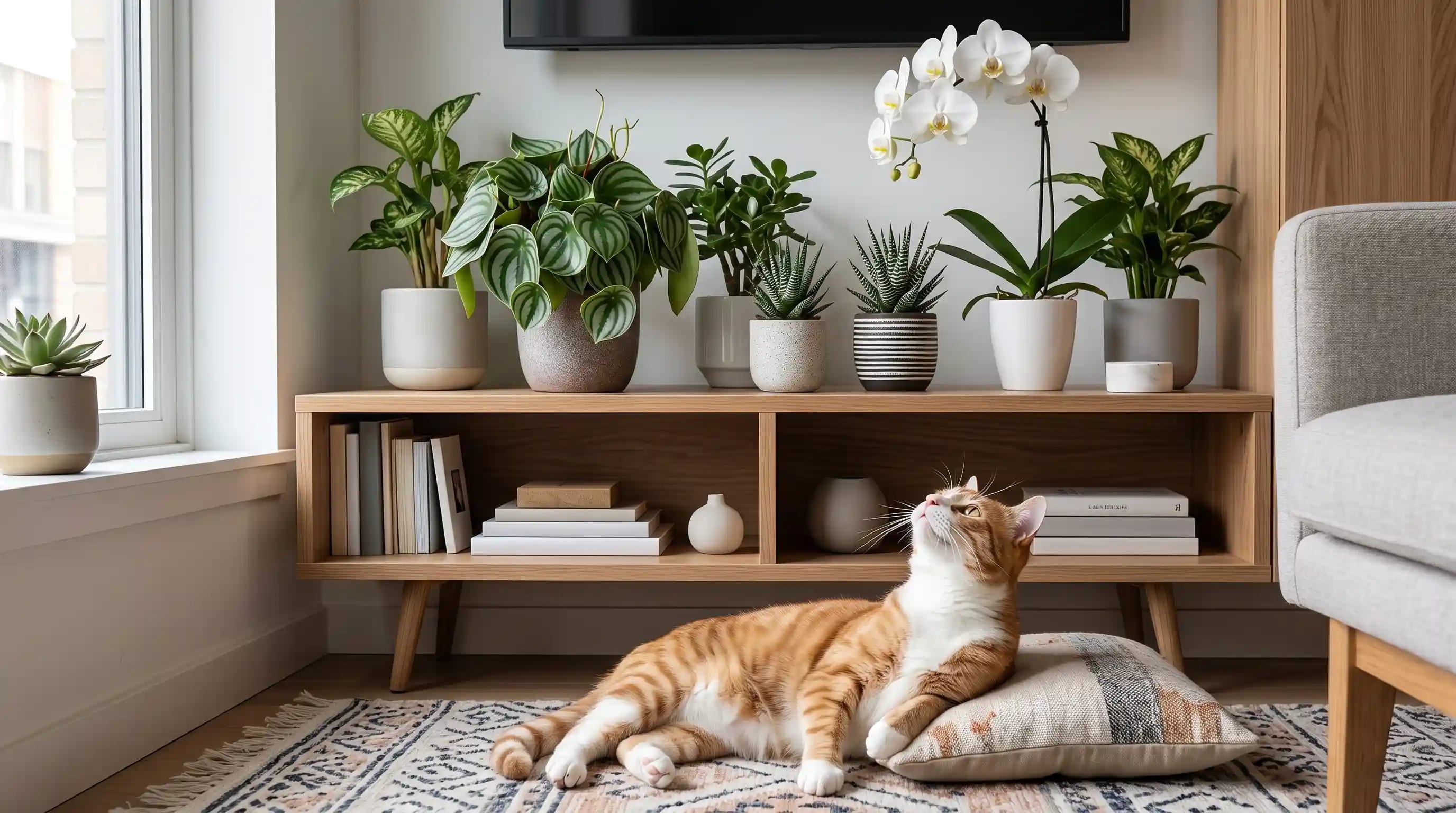
These are the best apartment plants that are safe for cats, especially if you want greenery that works in a small home and does not create quiet background stress every time your cat sniffs a leaf.
Key Takeaways
- Small-space plants should be safe first, aesthetic second: In an apartment, your cat is much more likely to reach the plant than in a large home.
- Hanging and shelf plants work best: They save floor space and make the room feel cleaner.
- Not every "easy apartment plant" is safe: Snake plant, pothos, and peace lily are common examples people get wrong.
- The best cat-safe apartment plants are compact, forgiving, and boring to maintain: That is exactly what most apartment owners need anyway.
What makes a good apartment plant for a cat home?
The best apartment plants for cat owners usually share the same basic profile: they are non-toxic to cats, stay relatively compact or vertical, tolerate average indoor light, and do not create constant soil mess or take over the room.
That last part matters more than people think.
In a small apartment, a plant is not just decor. It becomes part of the traffic flow, the cleaning routine, and the visual weight of the room. A giant dramatic plant may look good on Pinterest, but if it crowds the walkway or gives your cat a daily temptation to chew, it stops being worth it.
If you want the toxic-first version of this topic, read:
1. Spider Plant
If you want one plant that feels almost tailor-made for apartment life, start here.
Spider plants are: easy to find, forgiving if you forget to water them, easy to hang or place on a shelf, and generally considered safe for cats.
They also look good in motion. The long leaves and baby offshoots soften a room without taking much floor space.
The only downside is that some cats are obsessed with them. Not because they are dangerous, but because they are fun. So if your cat treats every leaf like a personal challenge, a hanging basket is smarter than a low table.
2. Calathea (Prayer Plant Family)
If you want something that looks more designed and less generic, calathea is one of the best safe choices.
It works well in apartments because: it stays visually rich without getting huge, looks high-end on shelves and consoles, and gives you bold leaves without the Monstera-level risk.
It is not the easiest plant on earth, but it is one of the best-looking cat-safe swaps for people who like strong foliage patterns.
3. Parlor Palm
Parlor palm is one of the safest answers to the question:
"What plant can make my apartment feel softer and calmer without becoming a giant problem?"
It works especially well in: corners, next to a sofa, beside a desk, and in lower-light apartments.
It gives that airy indoor-greenery look without eating the whole room. If you want one larger plant that still feels apartment-appropriate, this is a strong option.

4. Peperomia
Peperomia is one of the most underrated small apartment plants for cat owners.
Why?
Because it solves several apartment problems at once: it stays compact, works on desks and shelves, comes in different leaf shapes and textures, and does not ask for a huge commitment.
This is a great plant if your apartment does not have much window space and you want something that feels intentional rather than wild.
5. African Violet
Not every apartment needs another green leaf plant.
If you want a little color without getting into risky flowering plants, African violet is a strong pick. It stays small, fits on windowsills or side tables, and feels more finished than a lot of generic houseplants.
It is also useful for people who want to make a room feel warmer without using a huge planter.
6. Haworthia
A lot of apartment dwellers want the succulent look, but that category is full of mixed signals.
Haworthia is one of the safer choices when you want something: sculptural, compact, easy to fit on a shelf or sill, and much easier to live with in a tight space.
This is the kind of plant that works well in a studio where every surface has to stay clean and controlled.
7. Orchid
If your apartment style leans cleaner, softer, or a little more minimal, orchids can work surprisingly well.
They do not give you the leafy "urban jungle" effect, but they do give: vertical elegance, a tidy footprint, and something that looks polished without looking bulky.
For people who want fewer, better-looking objects in a small home, orchids are often a better fit than giant foliage plants.
The apartment plants to skip, even if every decor list recommends them
This is the part that matters.
Many plants recommended for apartments are popular because they are tough and stylish. That does not make them safe for cats.
The Good
- +Spider plant
- +Calathea
- +Parlor palm
- +Peperomia
- +African violet
- +Haworthia
- +Orchid
The Bad
- -Snake plant
- -Pothos
- -Peace lily
- -Aloe vera
- -Fiddle leaf fig
- -Monstera
Those plants keep showing up in "small apartment decor" lists, but that does not change what they do in a cat home.
If your apartment is small, the risk is often higher, not lower, because your cat has fewer zones and more daily contact with everything in the room.
The best setup in a small apartment
The safest apartment plant is not just about the species. It is also about where you put it.
In a small home, the best setup usually looks like one hanging plant, one medium shelf plant, and one compact sill or desk plant.
That gives the room life without turning every surface into a plant obstacle course.
It also keeps your cat's world calmer.
If a plant is right beside the feeding area, beside a litter zone, or sitting in the middle of a daily walking path, it becomes part of the friction of the room.
For small-space placement thinking, these help:
- Where To Put Cat Food In A Small Apartment (Without Ruining Your Space)
- Cat-Proof Windows: How to Secure Screens & Blinds
- Apartment Balcony Safety: How to Build a Renter-Friendly 'Catio'
If your cat still chews "safe" plants
Safe does not mean unlimited.
Even non-toxic plants can still cause mild stomach upset, vomiting from too much fiber, or chewing habits you do not want to reward.
So if your cat constantly chews leaves, the answer is not just "buy safer plants." It may also mean they need more enrichment, cat grass of their own, or a better outlet for boredom.
That is especially common in apartment cats.
Final thoughts
The best apartment plants that are safe for cats are usually not the most dramatic ones.
They are the ones that quietly make your space feel better without adding fear, mess, or friction. In a cat home, especially a small one, that matters more than chasing whatever plant is trending this month.
If you want the short version, start with spider plant, calathea, parlor palm, peperomia, African violet, haworthia, and orchid.
That gives you a much safer place to start than blindly copying a decor reel and hoping your cat never bites anything.
Frequently Asked Questions
Some of the best options for small apartments include spider plant, calathea, parlor palm, peperomia, African violet, haworthia, and orchids. They are easier to fit into small rooms and generally safer for cat homes than many trendy foliage plants.
Some of the most common apartment plants to be careful with include snake plant, pothos, peace lily, aloe vera, monstera, and fiddle leaf fig. They are popular decor plants, but they are not the safest picks for a cat home.
Usually yes. Hanging plants save floor and shelf space, help the room feel cleaner, and reduce casual chewing. They are not a total guarantee, because some cats still climb, but they are often easier to manage in tight homes.
Yes, sometimes. Even non-toxic plants can still cause mild stomach upset if a cat eats too much of them. Safe means much lower risk, not a free pass to let your cat chew the whole plant.


