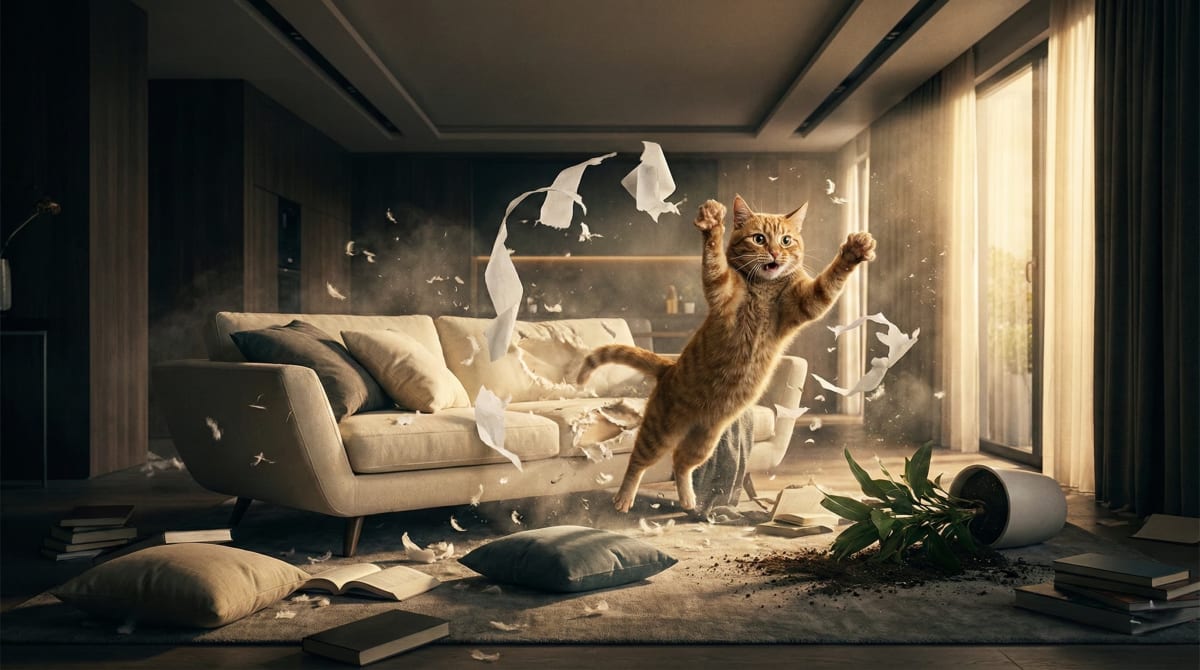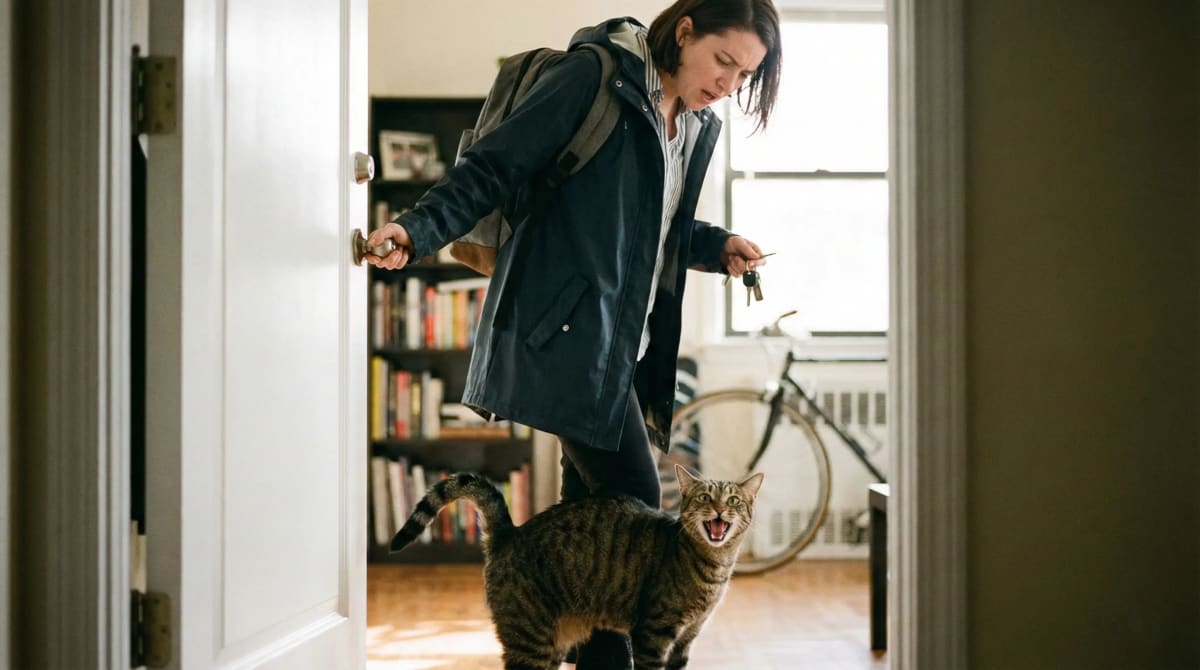
To a cat, a small apartment can feel like a luxurious hotel or a very gilded cage. The difference lies in Enrichment.
In the wild, a cat’s day is filled with "initiative": they decide when to hunt, where to climb, and what to investigate. In a typical apartment, we make all those choices for them. This lack of agency leads to "Zoomies" at 3 AM, overeating, and the slow destruction of your favorite sofa.
To keep your Apartment Cat healthy, you must reintroduce Initiative Enrichment - environmental triggers that encourage your cat to think and move on their own.

Key Takeaways
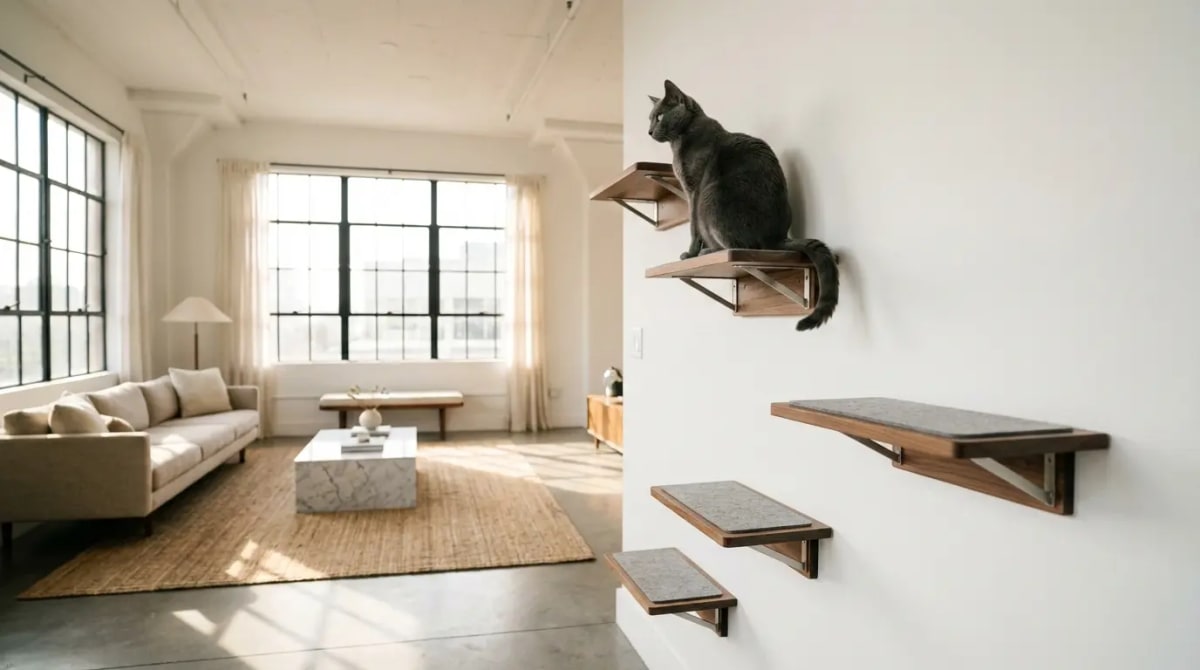
- Verticality is King: If you lack floor space, build up. Wall shelves are the ultimate apartment hack.
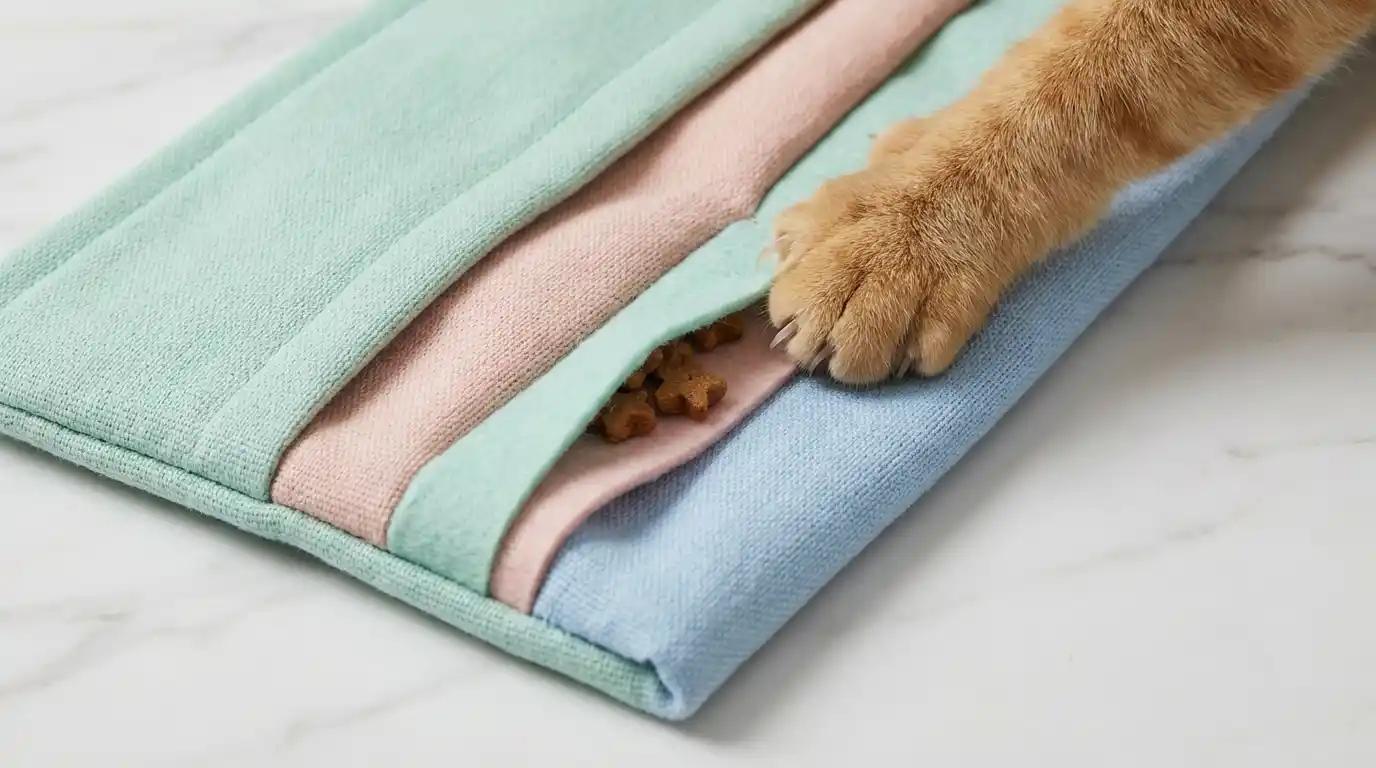
- Work for Food: Stop using bowls. Foraging mats and puzzle feeders trigger the "seeking" part of the brain.
- Sensory Input: Use "Cat TV" (bird feeders) and rotating scent toys to prevent sensory habituation.
- Consistency: 15 minutes of "initiative" play is more tiring for a cat than an hour of mindless laser chasing.
Medical Disclaimer
The content on InnerMeow is for informational and educational purposes only. It is not intended to provide medical advice or to take the place of such advice or treatment from a personal veterinarian. All readers/viewers of this content are advised to consult their veterinarians or qualified health professionals regarding specific health questions. InnerMeow does not take responsibility for possible health consequences of any person or pet reading or following the information in this educational content.
1. The Vertical "Cat Highway"
Floor space in a studio apartment is a premium. However, the walls are usually empty. By installing a "Cat Highway", a series of staggered shelves and perches - you effectively double your cat’s living territory without losing a single square inch of your own space.
Higher vantage points lower a cat's stress. It allows them to survey their "kingdom" from a position of safety, which is essential for Behavior management in multi-pet homes.
2. Ditch the Bowl: Foraging Instincts
In nature, cats eat 10–20 small meals a day, each preceded by a hunt. When we put a bowl of kibble down, we skip the most mentally rewarding part of the process.
Initiative Enrichment means making the cat "find" their food. This burns calories and provides a dopamine hit when they succeed.
The Good
- + Reduces 'scarf and barf' (vomiting from eating too fast).
- + Provides mental stimulation that curbs nighttime meowing.
- + Prevents obesity in sedentary indoor cats.
The Bad
- - Can be messy if using wet food puzzles.
- - Requires a transition period for 'lazy' cats to learn.
3. Visual and Olfactory "TV"
Living high up in a city building can be visually sterile. To fix this, create a "Biological Window."
- The View: Install a window perch and, if possible, a window-mounted bird feeder. This provides hours of "Initiative Observation."
- The Scent: Cats live in a world of smell. Bring the outside in. Occasionally bring in a leaf, a piece of bark, or a pinch of Silvervine. Hide these "scent markers" around the apartment for your cat to discover.
4. Choosing the Right Tools
When living in a small space, you want toys that are either high-utility or easily stored.
| Enrichment Type | Small Space Utility | Maintenance Level |
|---|---|---|
| Puzzle Feeders | High (Replaces food bowl) | Low (Easy to wash) |
| Wall Shelves | Extreme (Uses zero floor space) | High (Initial install) |
| Electronic Toys | Medium (Requires floor space) | Medium (Battery/Charging) |
| Scent Rotation | High (Tiny storage footprint) | Low (Change weekly) |
5. The "Toy Rotation" Rule
A common mistake is leaving every toy out at once. To a cat, a toy that never moves is just "furniture."
To maintain initiative, keep only 3 toys out at a time. Every Sunday, put them in a bin and bring out 3 "new" ones. This simple Living hack keeps the environment feeling fresh and explorable.

Final Thoughts
How many hours a day should I play with my cat?
Aim for a cumulative 20-30 minutes per day. This is best split into two or three furious 10-minute sessions (simulating a hunt) rather than one long marathon.
Best solo toys for cats home alone
The best solo toys are passive enrichment: food puzzles, cat TV (bird feeders), or motion-activated balls. Avoid string or wand toys when unsupervised due to strangulation risks.
Signs your indoor cat is bored
If your cat is over-grooming, attacking your ankles, or sleeping more than 18 hours a day, they are likely under-stimulated. Destructive scratching is often a cry for activity, not just sharp claws.
Enrichment isn't an "extra" - it is a biological necessity. By making small changes to how you feed and house your cat, you can transform a tiny apartment into a stimulating, vibrant world.
For more tips on urban cat ownership, visit our Journal or dive deeper into Cat Health.
Frequently Asked Questions
Start easy. Use a shallow tray or a cardboard egg carton. Put high-value treats (not just kibble) in plain sight. As they get the hang of it, increase the difficulty by hiding the treats under flaps.
They can be frustrating because there is no 'physical catch.' If you use a laser, always end the session by pointing it at a physical treat or a toy they can actually grab to complete the hunt cycle.
You don't need to move furniture. Simply moving a scratching post to a different window or adding a new cardboard box every two weeks is enough to trigger their 'investigative' behavior.