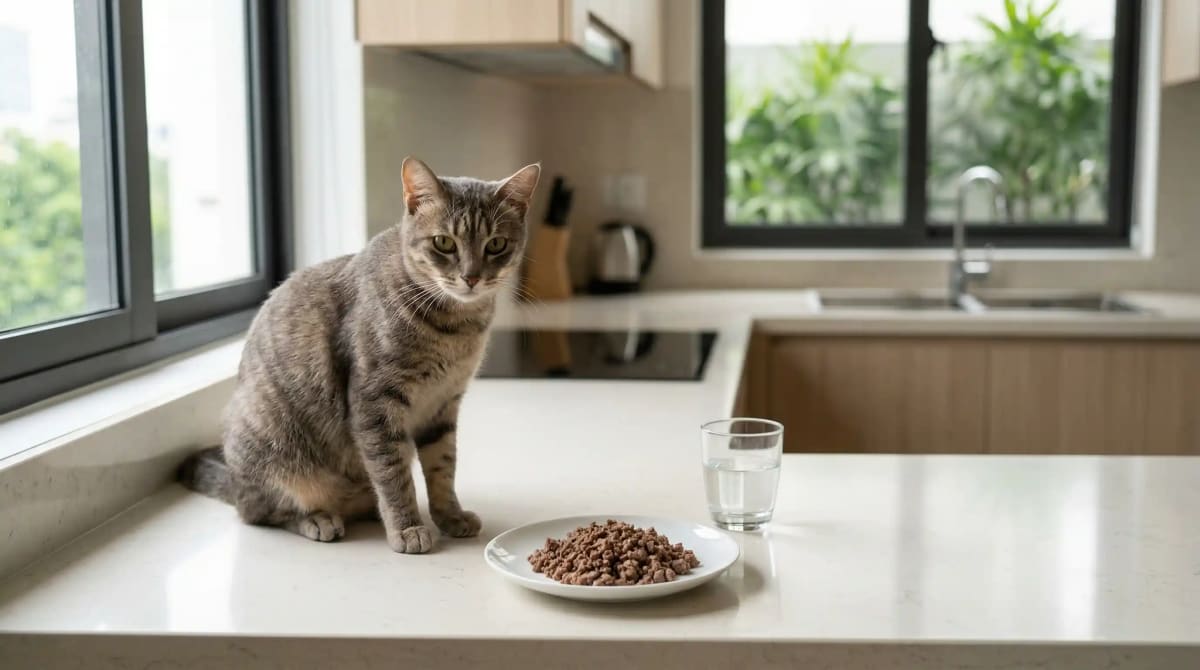
Ground beef seems like an easy yes for cats.
It is meat. Cats are carnivores. The smell drives them crazy. End of story, right?
Not quite.
Cats can eat cooked ground beef, but that does not mean every bowl of ground beef is a good idea. The details matter: how fatty it is, whether it is seasoned, how much you give, and whether you are offering it as a treat or trying to turn it into a meal.
That is where people get into trouble. The beef itself is usually not the issue. It is the salt, garlic, onion powder, grease, or oversized portion that comes with it.
Here is the simple answer, plus the rules that actually keep it safe.
Key Takeaways
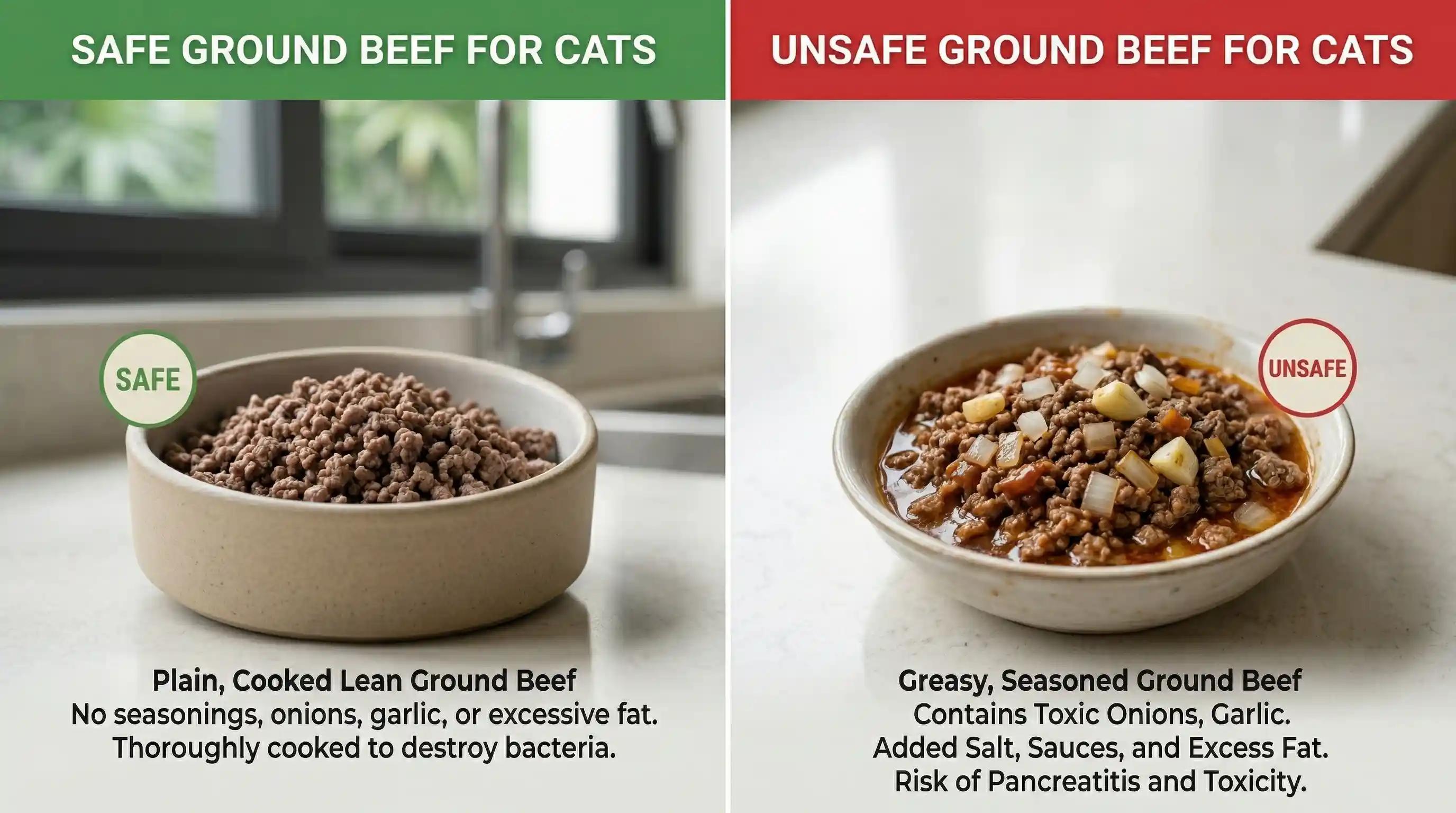
- Yes, cats can eat cooked ground beef: It must be plain and fully cooked.
- The biggest problem is seasoning, not the beef: Onion and garlic are the real danger.
- Lean is better: Fatty ground beef can upset the stomach and trigger pancreatitis in sensitive cats.
- Think topper, not full dinner: A little plain beef is fine. A full homemade beef diet is not balanced enough on its own.
1. Yes, But Only If It Is Plain
Plain cooked ground beef is generally safe for cats in small amounts.
That means:
- no onion
- no garlic
- no black pepper
- no chili flakes
- no sauces
- no taco seasoning
This is where a lot of people go wrong. They are not feeding the cat "ground beef." They are feeding the cat burger meat prepared for humans.
That is a completely different thing.
If you made taco meat, meatballs, or pasta sauce, do not share it. Even a little garlic or onion powder can be a problem for cats.
If you want a broader list of safe and unsafe people-foods, this pairs well:
2. Is Ground Beef Good For Cats?
It can be useful, but it is not a magic food.
Ground beef gives cats:
- animal protein
- fat for energy
- strong smell and flavor, which can help a picky eater
That is the good part.
The limit is that ground beef on its own is not a complete cat diet. It does not cover the full vitamin and mineral balance your cat needs long term. So yes, it can be a good treat or food topper. No, it should not quietly replace a complete cat food unless a vet has told you exactly how to build that diet.
3. The Best Kind To Use
If you are going to share some, go for:
- plain
- fully cooked
- low-fat or lean ground beef
Leaner beef is usually easier on the stomach. Very fatty beef can cause loose stool, vomiting, or just a greasy digestive mess later.
For many cats, the best use is:
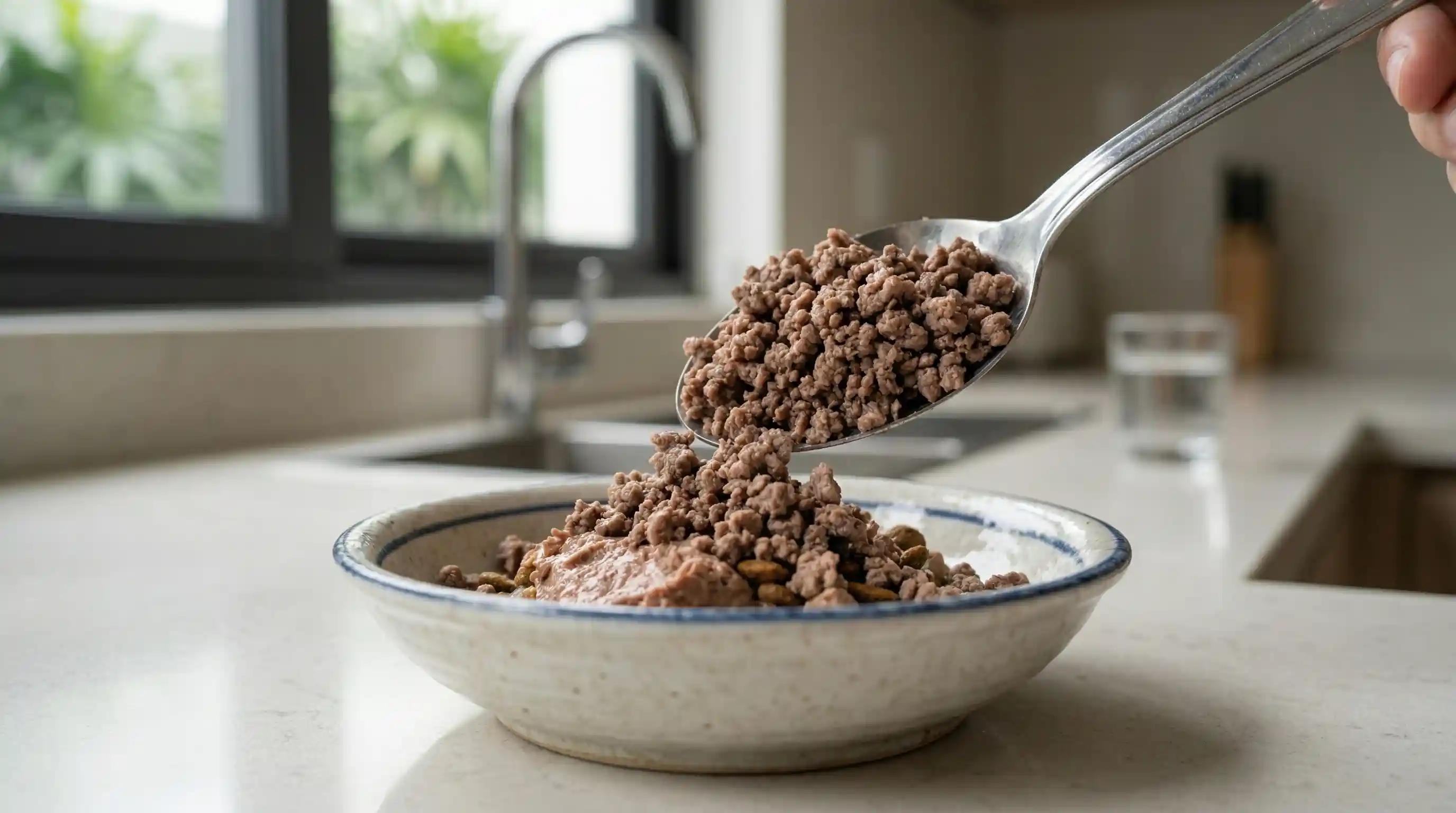
- a spoonful mixed into regular wet food
- a small topper to tempt a fussy eater
- a rare treat, not a daily habit
| Type | Better Or Worse? | Why |
|---|---|---|
| Lean cooked ground beef | Better | More protein, less stomach upset |
| High-fat cooked ground beef | Worse | Harder to digest and easier to overfeed |
| Seasoned beef | Unsafe | Onion, garlic, and salt are the problem |
| Raw ground beef | Risky | Higher bacterial load and not worth the gamble |
4. How Much Is Safe?
For most cats, a little goes a long way.
Think:
- a teaspoon for a small cat
- maybe a tablespoon for a large cat
That is enough to be a treat.
What you do not want is half a bowl of beef replacing dinner, especially if your cat is not used to richer food. That is how you get the "I thought this was a nice treat and now the litter box is a disaster" outcome.
5. The Biggest Risks People Miss
Most of the time, the danger is not the beef itself.
It is one of these:
Seasoning
This is the big one.
Onions and garlic are toxic to cats. That includes:
- fresh onion
- onion powder
- garlic powder
- sauces and marinades
If the beef was made for people, assume it is not safe unless you know exactly what went into it.
Too Much Fat
Greasy beef can hit hard, especially in cats with sensitive stomachs.
Some cats will just get diarrhea. Some will vomit. A few can tip into pancreatitis risk if they are already prone to digestive trouble.
Too Much At Once
Cats do not need a giant serving of "special food." A small amount is enough.
6. What About Raw Ground Beef?
People ask this a lot because cats are carnivores and raw diets sound natural.
But raw ground beef is a different risk than a whole cut of meat. Once meat is ground, bacteria is spread across the batch much more easily. That increases the food safety risk for both your cat and your kitchen.
For most owners, there is no real upside that justifies the mess and uncertainty.
If the question is "Can my cat eat beef?" the safer answer is still:
Yes, plain and cooked.
7. When Ground Beef Can Actually Be Helpful
There are a few situations where a little plain cooked ground beef can be genuinely useful:
- your cat is being picky and needs a stronger-smelling topper
- you need to hide a pill in a tiny bite of food
- your cat needs encouragement to finish regular wet food
This is where ground beef works best: as a helper, not as the whole plan.
If you are using people-food as a regular add-on, it is worth checking the bigger food-safety picture too:
- Christmas Feast for Cats: 10 Human Foods They Can Safely Eat (And What to Avoid)
- Stop! 5 Common Household Items That Are Toxic To Cats (And 2 That Are Actually Safe)
8. Signs It Did Not Agree With Your Cat
If your cat tries ground beef and it does not sit well, you will usually know fairly quickly.
Watch for:
- vomiting
- diarrhea
- greasy stool
- refusing the next meal
- obvious stomach discomfort
If the beef was seasoned, or if you know it had onion or garlic in it, do not just "wait and see" casually. Use your judgment fast and call your vet if the amount was meaningful.
If you are unsure whether another ingredient in the pan was safe, the quickest route is the Safety Checker.
Final Thoughts
Cooked ground beef is one of those foods that is usually fine in the right form and a bad idea in the wrong one.
If it is plain, fully cooked, lean, and served in a small amount, most cats can enjoy it safely.
If it is greasy, salty, or seasoned for humans, skip it.
That is really the whole rule:
A little plain cooked ground beef can be a good treat. A full human-style beef dish is not cat food.