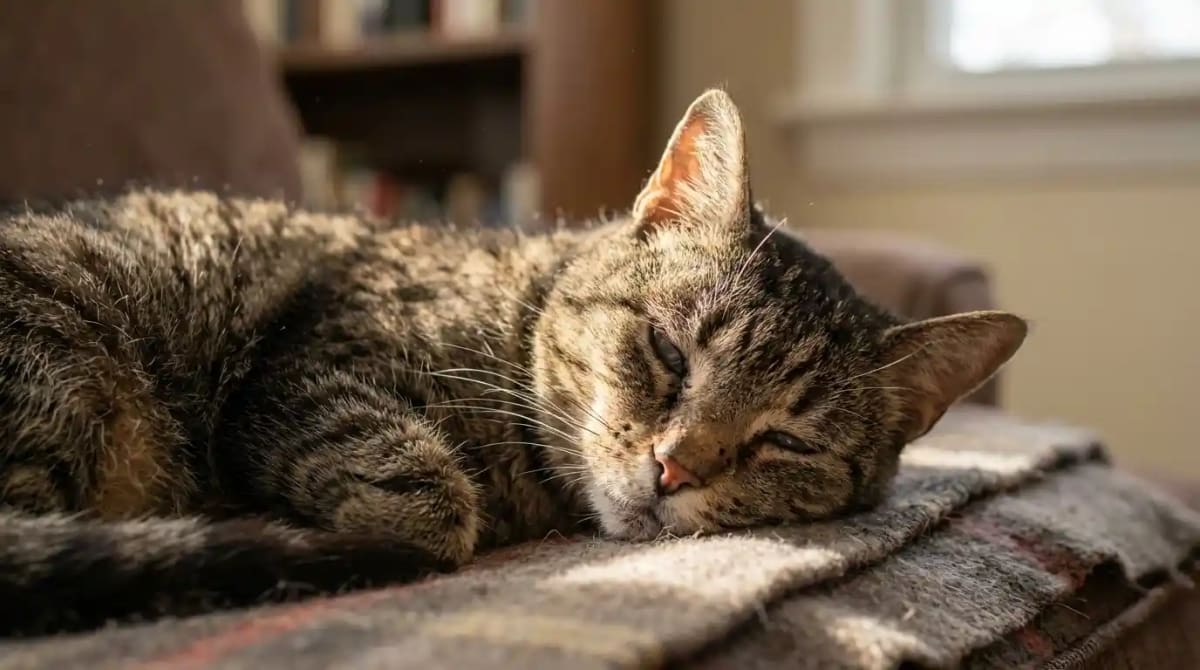
There is a specific kind of heartbreak that comes with loving a senior cat.
You look at them sleeping in a sunbeam, and you remember when they used to backflip off the refrigerator. Now, they hesitate before jumping on the couch. Their fur feels a little thinner. Their meow sounds a little raspier.
Aging is not a disease, but it is a thief. It steals muscle, hearing, and cognitive sharpness.
As an owner, your job shifts from "playmate" to "nurse." But how do you know what is normal fading and what is a treatable illness? Is he skinny because he is 15, or because his kidneys are failing? Is she sleeping all day because she is tired, or because she is in pain?
Here is your guide to navigating the twilight years with grace and vigilance.

Key Takeaways
- Weight Loss: "Old age" doesn't cause drastic weight loss. Disease does. If you can feel their spine, see a vet.
- The "Yowl": Nighttime howling is a classic sign of feline dementia or thyroid issues.
- Mobility: Hesitating to jump is not "laziness"; it is almost certainly arthritis.
- Water: Increased drinking is the #1 sign of Kidney Disease in seniors.
1. The "Skinny Old Cat" (Sarcopenia vs. Disease)
We often accept that old cats get bony. To an extent, this is true. Sarcopenia is the natural loss of muscle mass due to aging.
However, there is a difference between "losing muscle" and "wasting away."
If your cat has an insatiable appetite but is still losing weight, this is a red flag on fire. In senior cats, this "Vampire Appetite" (eating significantly but losing weight) is the hallmark of Hyperthyroidism or Diabetes.
Conversely, if they are losing weight because they have stopped eating, it could be dental pain or Kidney Disease.
The Spine Test: Run your hand down their back.
- Normal: You can feel the bumps of the spine but they are covered by a layer of muscle/fat.
- Warning: The spine feels like a serrated knife or a string of beads. This indicates a Body Condition Score (BCS) that is dangerously low.

2. The "Sundowners": Sleep & Dementia
Does your sweet, quiet cat suddenly turn into a werewolf at 3 AM?
Senior cats often suffer from Cognitive Dysfunction Syndrome (CDS)—the feline equivalent of Alzheimer's.
- Disorientation: They wander into a room and stare at the wall, forgetting why they are there.
- Altered Sleep Cycles: They sleep like the dead all day (deep coma sleep) and then pace the house all night.
- Vocalization: They yowl loudly in the dark because they wake up confused and alone.
Check the Ears: Before you diagnose dementia, check their hearing. Deaf cats often yowl because they can't hear themselves, so they turn the volume up to max.
3. The "Invisible Pain": Arthritis
Cats are stoic. They won't limp until the pain is excruciating. Instead, they just... stop doing things.
If your cat used to sleep on the high cat tree and now sleeps under the bed, that isn't a preference change. That is Osteoarthritis. Jumping hurts, so they choose the floor.
- The Litter Box Struggle: If your senior cat starts pooping right next to the box, look at the entrance. Is it too high? Stepping over a 4-inch rim with arthritic hips is painful. Switch to a low-entry senior pan or use a best cat litter that is soft on sensitive paws (like paper pellets).
See our guide on subtle signs of pain to catch this early.

4. When To See The Vet (The Senior Checklist)
If your cat is over 11 years old, "wait and see" is no longer a valid strategy. Things go wrong fast.
Use this checklist. If you check any box, go to the vet.
- Drinking water from the tap/toilet (Excessive thirst).
- Clumps of urine in the box are suddenly huge (Kidney issues).
- Bad breath (Tooth resorption).
- Motted or greasy fur (They can't reach to groom).
The Good
- + Routine Bloodwork: Catches kidney failure years before symptoms appear.
- + Heated Beds: The absolute best gift for arthritic joints.
- + Elevated Bowls: Helps them eat without crouching painfully.
- + Nightlights: Helps cats with cataracts navigate the dark.
The Bad
- - ignoring weight loss: Assuming it is 'just old age' is the #1 mistake.
- - Moving Furniture: Disorients blind or dementia cats.
- - Dry Food Only: Seniors need hydration; switch to wet food.
Final Thoughts
Loving a senior cat is a privilege. They have spent a lifetime studying you, and they know your soul better than any human.
Don't let their silence fool you. Watch their weight, watch their sleep, and watch their water bowl. They cared for you when you were sad; now it is your turn to care for them when they are frail.
For more diagnostic help, check our Sick Cat Warning Signs to rule out acute illness.
How much should a senior cat sleep?
A senior cat can sleep 18-20 hours a day. This is normal if they are alert when awake. If they are lethargic, unresponsive, or sleeping in the litter box, that is illness, not age.
Best food for senior cats gaining weight?
If your senior is gaining weight (rare but possible), do not put them on a "diet" without a vet check. However, usually, we want them to maintain muscle. Look for high-protein, wet food (pâté) which is easier to chew for cats with dental issues.
Why is my old cat wobbling when walking?
Wobbling (Ataxia) is never normal. It can indicate an ear infection, a stroke, or severe weakness from anemia. This is an immediate vet emergency.


