You bring someone new home. Maybe it is a new partner, a new roommate, or even a new baby. (If you specifically brought home a new kitten, check out our guide on signs of jealousy towards a new kitten instead). You expect your cat to be happy for you.
Instead, they turn into a nightmare.
They sit physically between you and your date on the couch. They stare daggers at the new person. Worst of all, they might leave a "present" in your partner's shoes. It feels personal. It feels like they are saying, "It's him or me."
We often laugh and say our cats are jealous. But is a cat's brain really capable of such a complex, human emotion? Or is something more primal going on?
Key Takeaways
- The Myth: Cats don't feel romantic jealousy. They feel "Resource Anxiety."
- The Resource: You are their most valuable asset (food + safety). They are guarding you.
- The Behavior: Peeing on things isn't spite; it is a desperate attempt to mix scents.
- The Fix: Don't punish. Make the "intruder" the source of all good things.
1. The "Boyfriend" Blockade (Why They Hate Your Date)
It is a classic scenario. You are cuddling with your partner, and your cat jumps up, wedges themselves directly into the gap between you, and starts purring loudly while staring at the intruder.
This isn't romantic rivalry. It is Territorial Claiming.
To a cat, you are not just a friend. You are a giant, walking resource generator. You provide food, warmth, and security. When a stranger enters your home and sits close to you, your cat sees a threat to their resources.
Why do they pee on his clothes? If your cat urinates on your boyfriend's bag or shoes, they aren't trying to ruin his day. They are trying to "fix" the smell.
- The stranger smells wrong (foreign).
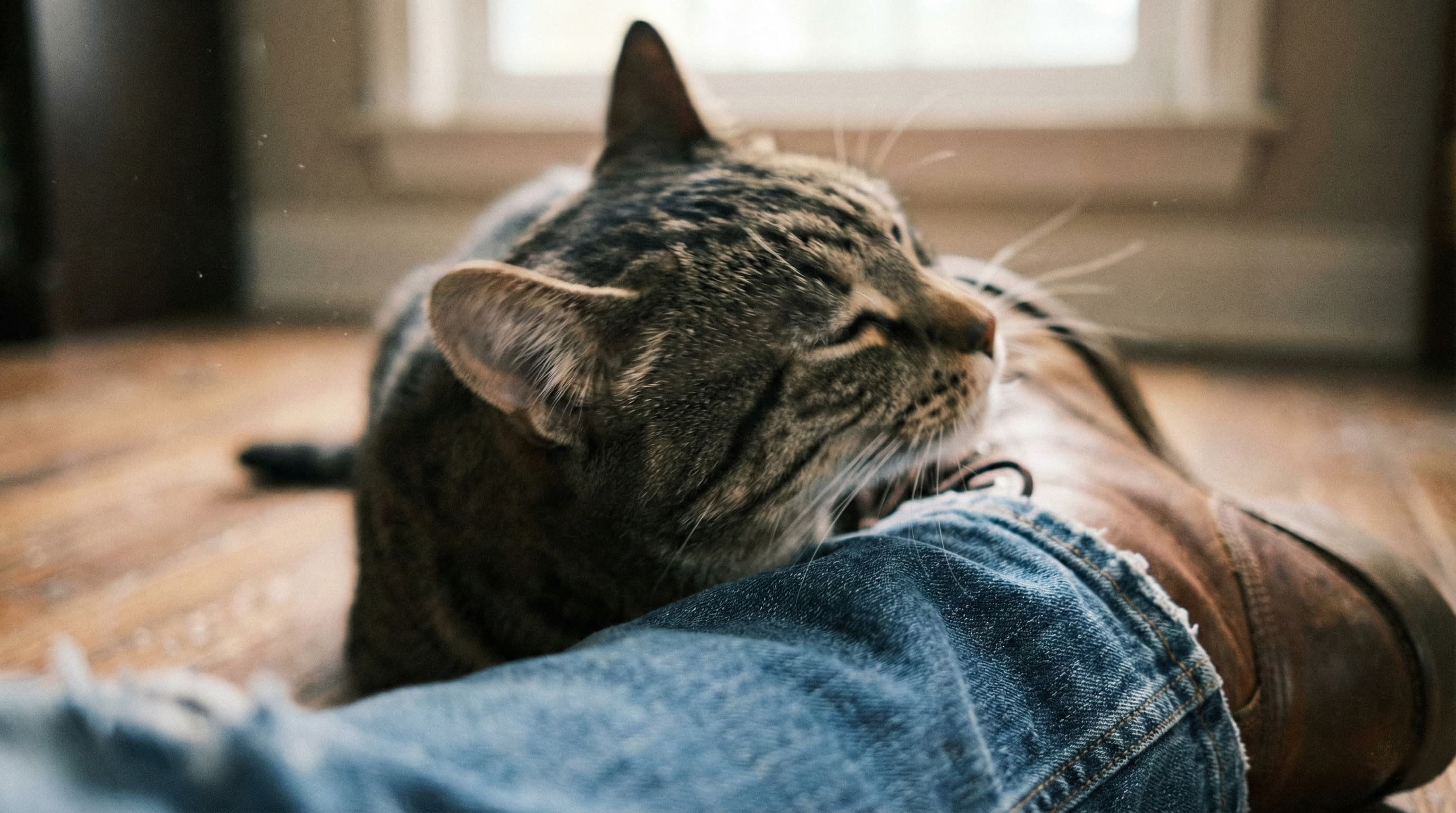
- Your cat covers that scent with their own (urine or rubbing) to make the stranger smell like "family."
- In their head, they are actually doing a good thing. They are integrating the intruder into the colony scent profile.
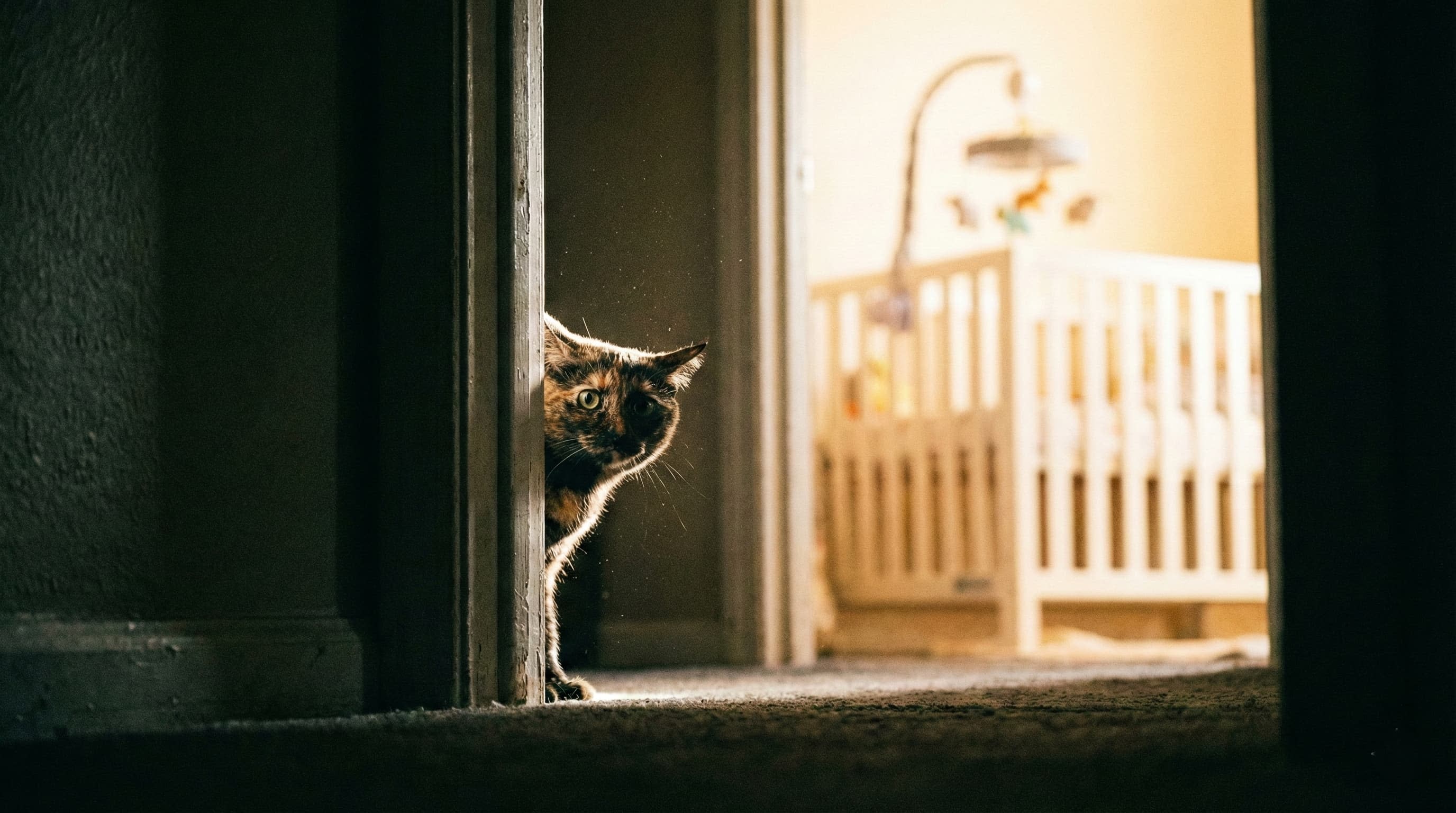
2. The "New Baby" Ghost (Where Did Kitty Go?)
Bringing a baby home is the biggest disruption possible. Suddenly, there are loud noises, strange smells (milk, powder), and most importantly: Your routine is destroyed.
You used to feed the cat at 7 AM. Now you are asleep or feeding the baby. You used to play in the evening. Now you are exhausted.
Your cat doesn't hate the baby. They are terrified of the change. They feel invisible and insecure because their predictable world has collapsed. This often manifests as:
- Hiding under beds (withdrawal).
- Over-grooming (anxiety).
- Aggression towards you (frustration).
3. The Science: It Is Not Jealousy, It Is FOMO
In human psychology, jealousy is complex. It involves comparison and self-esteem.
In feline psychology, it is simpler. It is Resource Guarding.
- Dogs guard bones.
- Cats guard territory and key individuals (You).
When you give attention to a new dog or person, your cat isn't thinking, "They don't love me anymore." They are thinking, "That resource is being depleted. I need to secure my share."
This is why they meow loudly when you are on the phone or knock things over when you are working. They are re-establishing their priority in the resource queue.
4. How to Fix It (The "Treat Dispenser" Method)
You can't explain to a cat that you have enough love for everyone. You have to prove it.
The Golden Rule: The "Intruder" brings the goods.
If your cat hates your new partner, your partner must become the only person who feeds the cat for a week.
- Feeding: Your partner fills the bowl. Your partner gives the treats.
- Play: Your partner holds the laser pointer or the feather wand.
- Space: Your partner should never approach the cat. Let the cat approach them.
The goal is to re-wire the cat's brain:
- Old thought: "This person takes my human away."
- New thought: "When this person is here, I get chicken. I want this person here."

Do cats get jealous of new partners?
Yes, but not romantically. They view your new partner as an intruder who is "stealing" your attention (a resource). They aren't heartbroken; they are resource guarding you.
Signs a cat is jealous of a baby
Common signs include urinating on the baby's things (scent mixing), hiding under furniture, or swatting at you when you hold the baby. It is an anxiety response to the change in routine.
How to stop cat jealousy aggression
The "intruder" must become the provider. Have the new person feed the cat and give treats exclusively. This rewires the cat's brain to associate the new person with rewards instead of resource loss.
Final Thoughts
Your cat's "jealousy" is actually a huge compliment. It means they value you above everything else in their world. They are just fighting to keep their spot in your life.
So, be patient. Don't yell at them for being insecure. Show them that the new addition to the family doesn't mean subtraction for them.
Frequently Asked Questions
This is classic resource guarding. The cat sees your affection as a limited resource. To fix this, give them treats simultaneously when they are calm near each other, or use two hands to pet both at once to show there is enough 'resource' to go around.
Cats rarely attack babies unprovoked. They are usually more afraid of the baby than the baby is of them. The risk is usually accidental scratches if a toddler grabs them. Always supervise interactions and give the cat a high shelf to escape to.
It depends on the cat's personality. A confident cat might take a few days. An anxious cat might take months. The key is never forcing interaction. Let them come to the new person on their own terms.