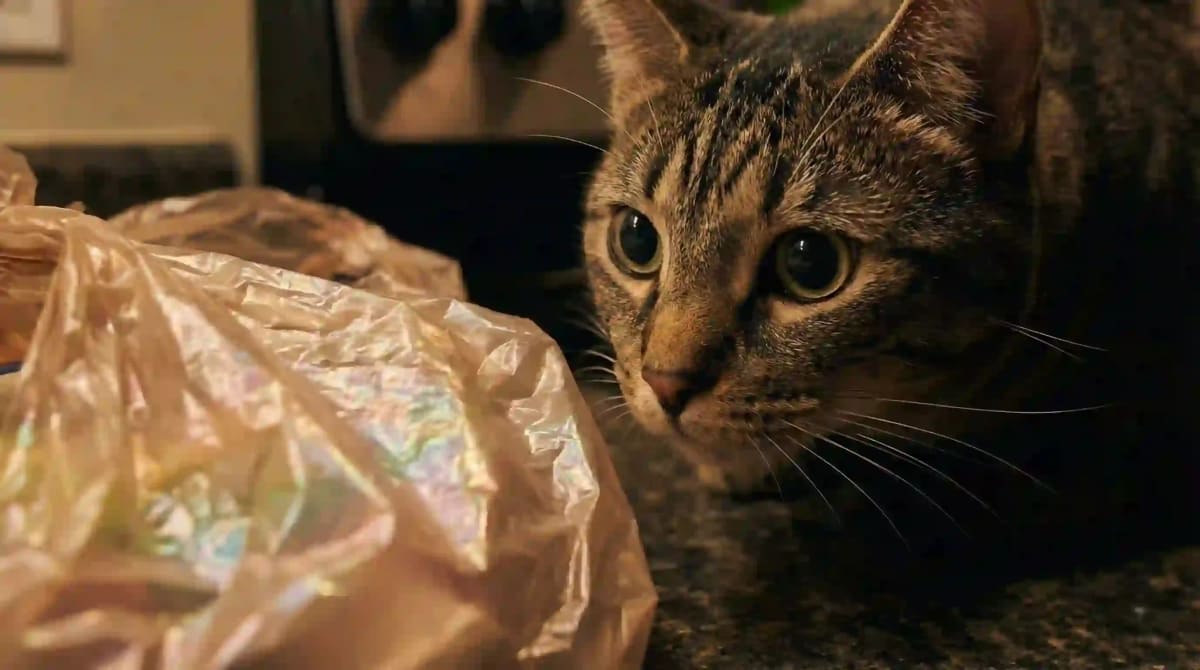
You thought you were getting your cat a best friend. Instead, you got a hiss, a swat, and now your usually cuddly cat is hiding under the bed and refusing to look at you.
It is easy to project human emotions onto our pets. We think, "Oh no, she feels betrayed!" or "He hates the new baby!"
But cats don't experience jealousy the way humans do. They don't worry that you love the kitten more. They worry that the kitten is going to steal their food, their bed, and their safety. To a resident cat, a new kitten isn't a "brother"; it is an intruder.
Here is the science behind feline jealousy and how to restore harmony in your home. (For jealousy regarding partners or babies, see our general guide on cat jealousy explained).

Key Takeaways
- The Root Cause: Jealousy in cats is actually "Resource Anxiety." They fear losing territory and food.
- The Silent Signs: Look for litter box regression (peeing on your bed) or withdrawal, not just hissing.
- The Fix: Use the "N+1 Rule" for resources (3 litter boxes for 2 cats).
- The Golden Rule: Always greet and feed the resident cat first to reinforce their hierarchy.
1. The Science: It Is Math, Not Hate
In the wild, a cat's survival depends on controlling a specific territory. That territory provides food, water, and shelter.
When you bring a new kitten home, you see a cute ball of fluff. Your cat sees a Competitor. In their mind, the math is simple:
- Before: 100% of the food + 100% of the territory = Safety.
- Now: 50% of the food + 50% of the territory = Threat.
This reaction isn't emotional spite; it is biological survival. The "jealousy" you see is actually stress caused by a sudden scarcity of resources.
2. Signs Your Cat Is "Jealous" (Stressed)
Aggression (hissing, swatting) is obvious. But cats often show their unhappiness in quieter, more heartbreaking ways.
The Silent Treatment Your cat stops sleeping on your lap. They turn their back to you. They spend all day on top of the fridge or under the bed. This is Avoidance - they are trying to minimize contact with the stressor (the kitten).
Litter Box Regression If your fully trained cat suddenly pees on your bed or the sofa, they aren't being "naughty." They are Scent Mixing. By putting their scent (urine) on your scent (bed), they are desperately trying to reclaim their territory and reassure themselves that this is still their home.
Over-Grooming Stress causes skin irritation. If you see bald patches on your cat's belly or legs, they might be licking themselves obsessively to self-soothe.

3. The Energy Mismatch
Another major cause of conflict is the energy gap.
- The Resident Cat: Likely an adult who sleeps 16-18 hours a day and values quiet.
- The Kitten: A nuclear energy battery that wants to wrestle, chase, and bite everything that moves.
When the kitten jumps on the older cat's head to play, the older cat responds with a hiss. This isn't hate; it is a boundary. It is the equivalent of a toddler jumping on a tired grandfather.
4. How to Fix It: The Abundance Strategy
You cannot talk your cat out of being jealous. You have to show them there is nothing to worry about.
The "N+1" Rule Never force them to share.
- Litter Boxes: You need 3 boxes for 2 cats.
- Food Bowls: Place them in separate rooms. Do not make them eat side-by-side yet.
- Water Fountains: Multiple locations. When resources are abundant, there is no need to fight for them.
Reinforce the Hierarchy The resident cat was there first. Respect that.
- Feed the resident cat first.
- Greet the resident cat first when you come home.
- Put the kitten in a "Time Out" room if they are harassing the older cat.
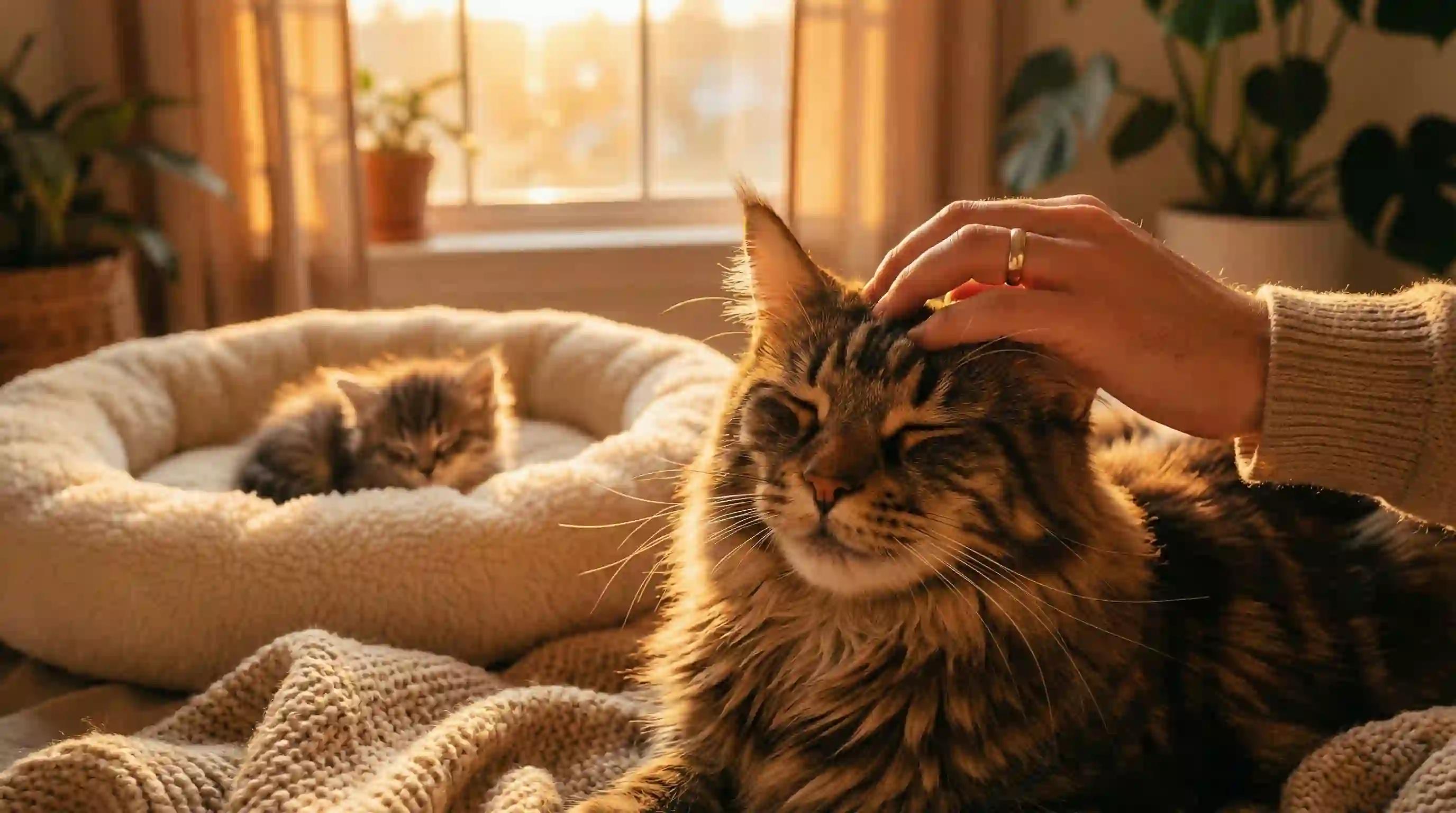
Quality Time (No Kittens Allowed) Dedicate 15 minutes a day to the resident cat without the kitten present. Lock the kitten in another room. Use this time to play, brush, or just cuddle your older cat. This reassures them that they haven't lost their bond with you.
How long does it take for cats to get along?
It varies wildly. Some bond in 3 days; others take 6 months. Detailed introductions using scent swapping can speed up the process. Never rush them.
Why is my cat hissing at the new kitten?
Hissing is a boundary, not an attack. The older cat is saying "Come no closer." It is a normal part of establishing hierarchy. Unless there is actual fighting (biting, screaming), let them communicate.
My older cat is depressed after new kitten
This is common. The older cat feels displaced. Ensure you give them 15 minutes of "solo time" every day without the kitten to reassure them that they are still your priority.
Final Thoughts
Peace takes time. For some cats, it takes 3 days. For others, it takes 3 months.
Do not force them to "hug it out." Let the resident cat set the pace. As long as you prove to them that their resources (and your love) are infinite, the hiss will eventually turn into a sniff, and the sniff will turn into a nap together.
Frequently Asked Questions
It depends. If there is hissing and swatting but no blood or fur flying, let them communicate boundaries. If they lock onto each other, scream, or fur is flying, break it up immediately by clapping your hands or using a pillow barrier. Never use your hands.
Most cats eventually reach a state of 'mutual tolerance' or friendship. However, not every pair will become best friends who sleep in a pile. As long as they can walk past each other without fighting, you have succeeded.